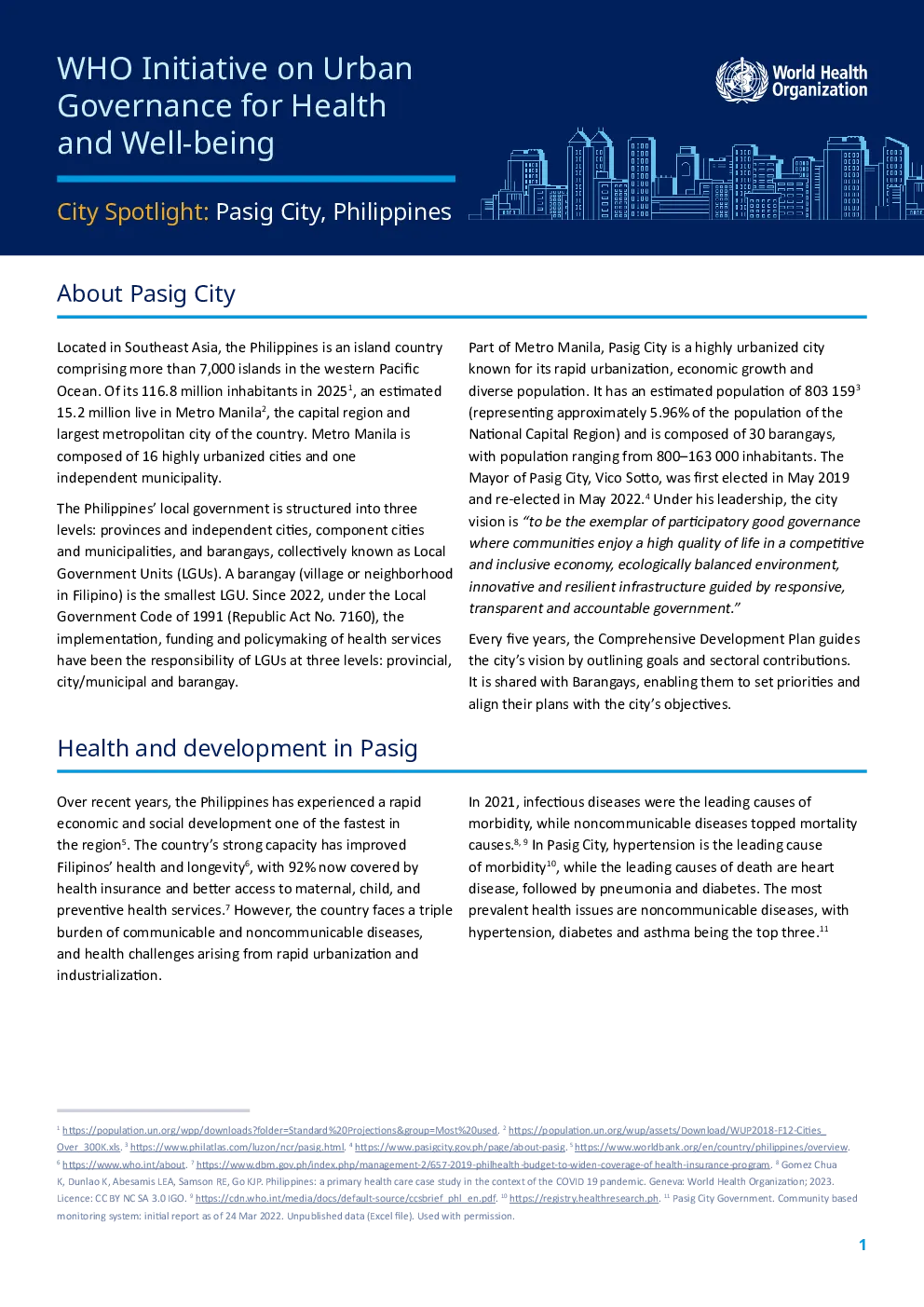
Pasig City, located in Metro Manila, Philippines, is a highly urbanized city with a population of approximately 803,159, representing about 5.96% of the National Capital Region. Under the leadership of Mayor Vico Sotto, the city aims to be a model of participatory good governance, focusing on a high quality of life, inclusive economy, ecologically balanced environment, and innovative infrastructure. The Philippines faces a triple burden of communicable and noncommunicable diseases, with rapid urbanization exacerbating health challenges. In Pasig City, hypertension is the leading cause of morbidity, while heart disease, pneumonia, and diabetes are the leading causes of death.
Phase 1 (2020–2024) Key Achievements and Activities:
- A multidisciplinary team participated in the WHO Urbanlead programme, identifying key strategies for strengthening health and well-being in urban governance.
- An Urbanlead Committee was appointed to manage the Initiative, facilitating intersectoral partnerships.
- The first Health Leadership Summit was organized, attended by over 100 participants including city officials, barangay captains, and civil society organizations.
- Over 100 barangay community leaders participated in capacity-building workshops, aligning budgeting and planning processes with health needs.
- Capacity building, leadership, and research & evidence initiatives were strengthened through collaborative platforms, integrated health promotion, and formalized participation of Local Health and School Boards in urban planning.
Initiative Progress:
- Community engagement is enhancing urban health governance through platforms like the City Development Council, barangay Assemblies, Local Health Board, and School Health Board.
- Health is being integrated across all aspects of barangay development plans, supported by the Department of Health’s Purok Kalusugan directive.
- Civil society is actively engaged in local planning, with the Civil Society Organization Academy ensuring the voices of vulnerable groups are heard.
- The Urbanlead Committee is now integrated into the CDC, coordinating intersectoral partnerships and integrating health considerations across development efforts.
Priorities for Phase 2 (2025–2028):
- Ensuring the Urbanlead Committee is formally represented in the city’s multisectoral coordination mechanism.
- Facilitating development and implementation of joint, evidence-based, and data-informed policies.
- Continuing to align and synchronize Pasig City’s Comprehensive Development Plan and BDPs.
- Organizing dialogues between local government, communities, and youth.
- Developing a barangay-level urban governance model to address food systems and other health challenges.
- Sharing good practices, developing guidance and advocacy materials, and further developing UGHW leadership and communication orientation and training.
The WHO Initiative on Urban Governance for Health and Well-being, supported by the Swiss Agency for Cooperation and Development, aims to improve health status and well-being through participatory and multisectoral urban governance. Pasig City, along with five other cities, is part of this Initiative, working to integrate health into urban governance and development.