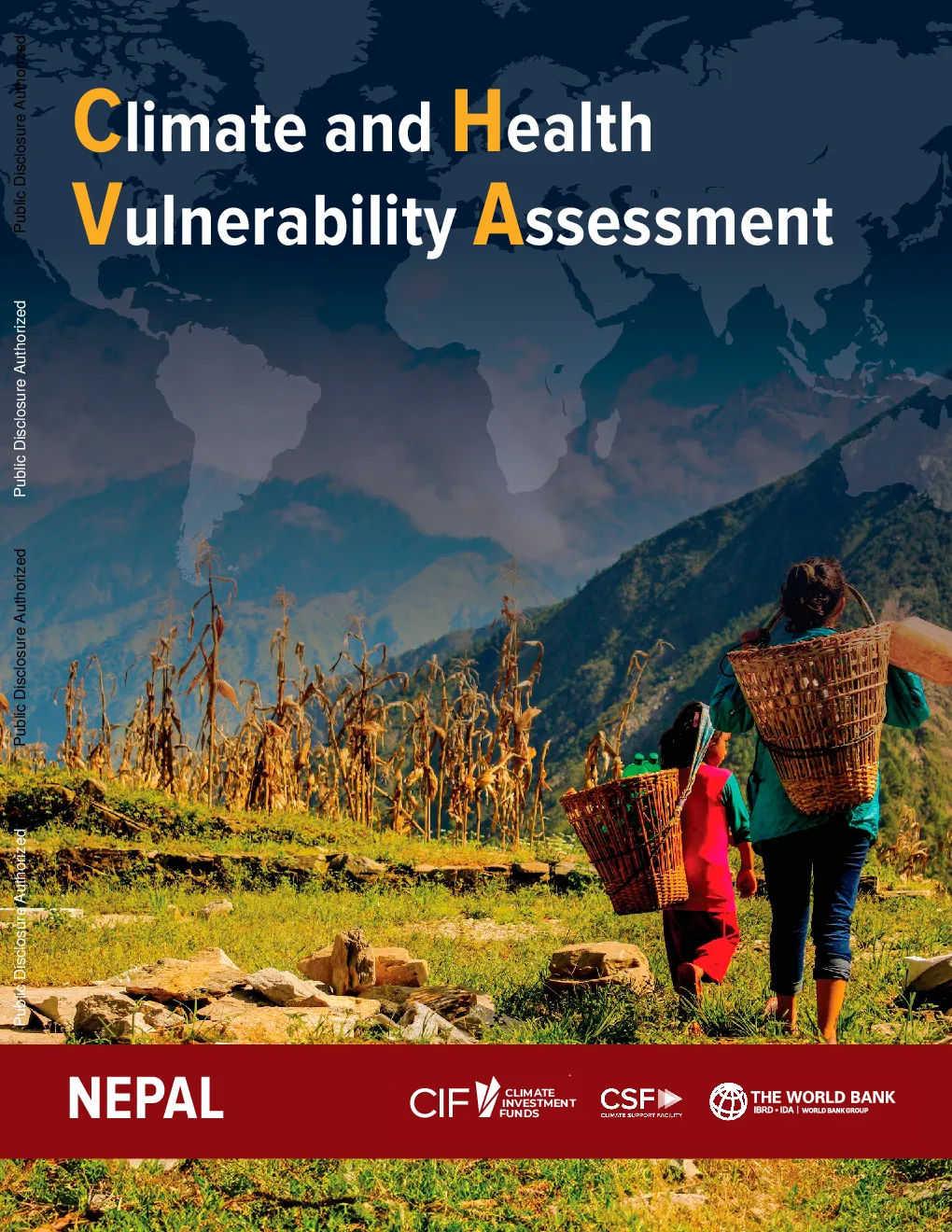
Climate and Health Vulnerability Assessment for Nepal
This comprehensive report evaluates Nepal's climate and health vulnerabilities, aiming to build climate-resilient healthcare systems through an analysis of climatology, climate-related health risks, the health system's adaptive capacity, and recommendations for improvement.
Executive Summary
The assessment highlights the critical role of addressing climate change in protecting public health in Nepal. It underscores the necessity for strengthening healthcare systems to cope with increased health risks associated with climate hazards.
I. Climatology
The report provides insights into Nepal's geographical features and observed and projected climatic conditions. Key findings include:
- Geography: Nepal's diverse landscape influences regional climates.
- Climatic Projections: Under SSP3-7.0, temperatures and precipitation patterns are projected to alter significantly by the 2030s and 2050s.
- Hazards: Increased frequency and intensity of extreme weather events pose significant threats.
II. Climate-Related Health Risks
The assessment identifies several health risks, including:
- Nutrition: Changes in agricultural productivity due to altered climatic conditions affect food security and nutrition.
- Vector-Borne Diseases: Increased vector habitats, particularly for dengue and malaria, due to warmer temperatures and altered rainfall patterns.
- Waterborne Diseases: Worsening water quality and availability due to climate impacts exacerbates disease transmission.
- Air Quality: Poor air quality, linked to climate change, poses significant respiratory health risks.
- Mental Health: Extreme weather events and climate-related stress contribute to mental health issues.
III. Adaptive Capacity of the Health System
The health system's resilience is evaluated, noting areas needing improvement:
- Leadership and Governance: Need for strengthened governance frameworks to coordinate climate-resilient health strategies.
- Health Workforce: Shortages in trained health personnel, particularly in remote areas.
- Health Information Systems: Inadequate data collection and management systems to inform timely interventions.
- Essential Medical Products & Technologies: Limited access to essential medicines and technologies in rural areas.
- Service Delivery: Challenges in providing consistent and effective healthcare services, exacerbated by climate-induced disruptions.
- Health Financing: Insufficient resources allocated towards climate adaptation and health resilience.
IV. Recommendations
To mitigate the identified vulnerabilities, the report suggests:
- Strengthening leadership and governance mechanisms to integrate climate change into health policy.
- Enhancing the health workforce, especially in remote areas, through training and recruitment.
- Improving health information systems to better monitor and respond to climate-related health risks.
- Expanding access to essential medical products and technologies, particularly in vulnerable regions.
- Ensuring robust service delivery systems that can withstand climate shocks.
- Increasing health financing, specifically for climate adaptation and health resilience measures.
The report concludes with a call for urgent action to build a more resilient healthcare system in Nepal, emphasizing the interconnectedness between climate change and public health.