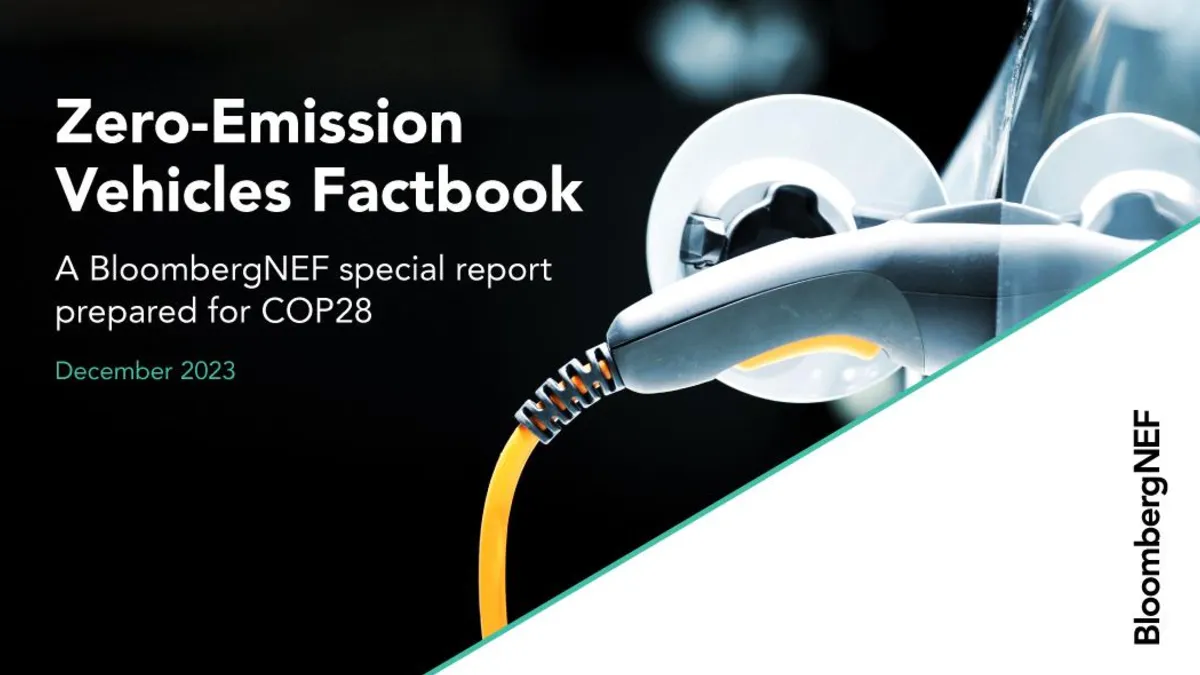
Zero-Emission Vehicles Factbook - December 2023
Overview and Key Messages
- Progress and Challenges: The global momentum towards zero-emission vehicles (ZEVs) has continued to rise since COP27, despite geopolitical challenges and rising interest rates.
- Electric Vehicle Sales Growth: Annual passenger electric vehicle sales are forecasted to reach approximately 14.2 million units in 2023, marking a significant increase from previous years.
- Global Impact: The growing number of electric and fuel-cell vehicles on the world's roads could displace almost 1.8 million barrels a day of oil demand for transportation this year, contributing to 4% of total road transport demand.
- Battery Manufacturing Expansion: Global lithium-ion battery manufacturing capacity has seen a 31% increase since 2022, reaching 2.2 terawatt-hours.
- Automotive Industry Commitments: Automakers have collectively committed to selling around 47 million EVs annually by 2030. Notably, automakers selling only electric vehicles now account for nearly 7% of global car sales.
Zero-Emission Vehicles Market Update
- Global Fleet Dynamics: The global road vehicle fleet continues to expand, reaching over 1.57 billion vehicles as of 2023. The fleet is expected to grow by 2% in 2023, with net fleet additions projected to amount to around 33 million vehicles.
- Regional Breakdown: China has surpassed the US as the country with the world's largest fleet of four-wheeled vehicles, representing about 23% of the global fleet in 2023. The US, Europe, and China dominate the market, while growth is most rapid in other regions.
- Emissions Perspective: Despite the growth in ZEVs, global road transport emissions continue to rise, estimated at 6.3 billion metric tons of CO2 in 2023, up 5% from 2022. North America leads in emissions, followed by Europe and China.
Market Drivers
- Technology Advancements: Rapid advancements in battery technology, charging infrastructure, and vehicle efficiency are driving the shift towards electric vehicles.
- Policy and Regulatory Frameworks: Stable, long-term policies supporting the growth of ZEVs and managing the phase-out of polluting vehicles are crucial for accelerating the transition.
- International Collaboration: Continued international cooperation and financial and technical assistance are essential for accelerating ZEV adoption in emerging economies.
Corporate Commitments
- Industry Targets: Automakers have set ambitious targets for EV sales, aiming to sell around 47 million EVs annually by 2030. Notably, automakers selling exclusively EVs now account for nearly 7% of global car sales.
- Diversification in Sales: There is a notable shift in sales composition, with EVs becoming a significant portion of the automotive market, particularly among automakers focusing solely on EV production.
Government Commitments
- Policy and Funding: National, regional, and local governments are implementing policies and providing funding to support the growth of ZEVs and manage the transition away from traditional fossil fuels.
- Infrastructure Development: There is a push for the development of charging infrastructure and other supporting infrastructure to facilitate the widespread adoption of electric vehicles.
Conclusion
The report underscores the progress made towards global net-zero in the road transport sector, with many indicators pointing in the right direction and EV adoption growing globally. However, it also highlights the need for renewed ambition from both governments and automakers to fully capitalize on the benefits of the ZEV transition, including cleaner air, new job opportunities, and economic growth. Continued international collaboration and support for emerging economies are essential to accelerate the transition to zero-emission transport systems.