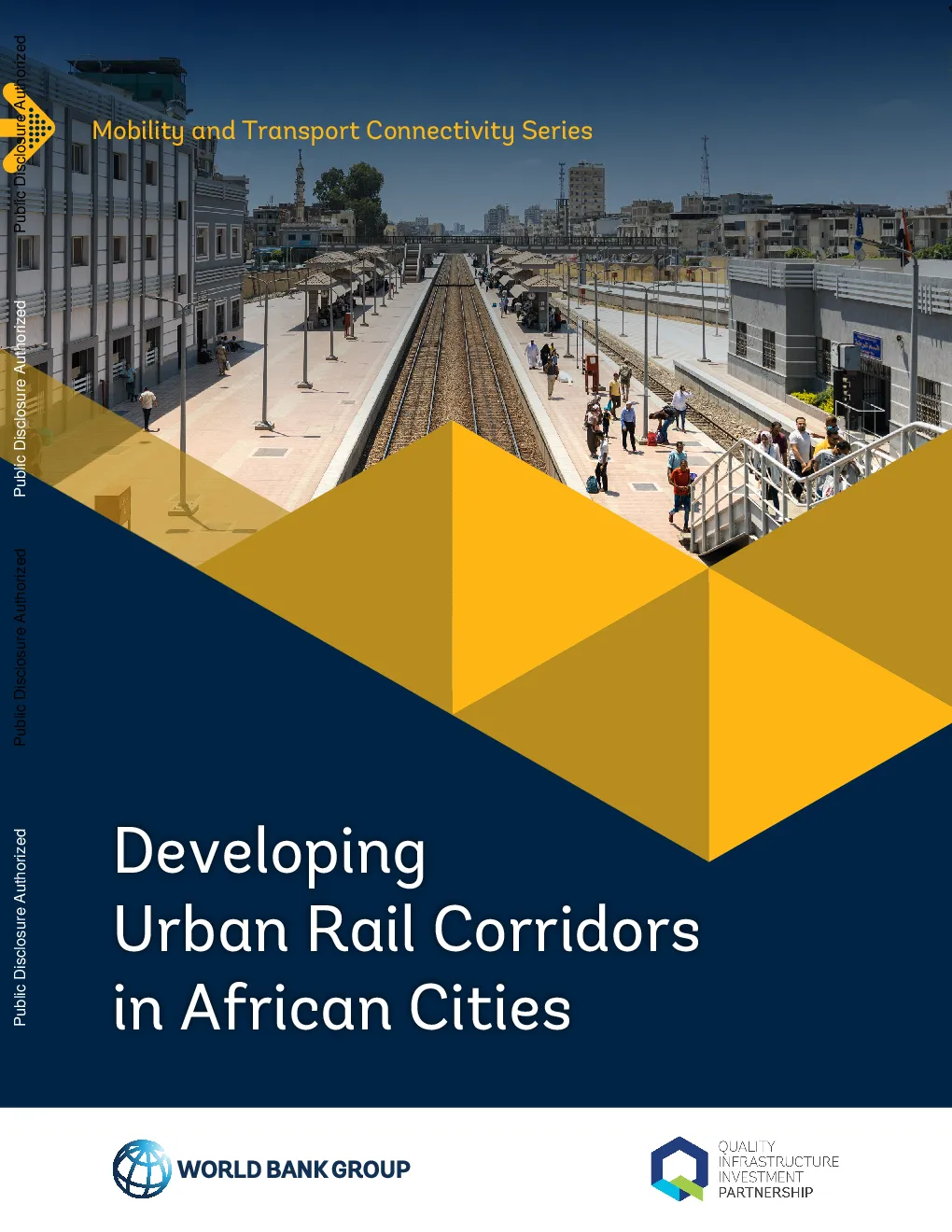
Developing Urban Rail Corridors in African Cities
Acknowledgments
This work acknowledges the contributions of various contributors, including the staff of The International Bank of Reconstruction and Development/World Bank, who have been instrumental in developing this document.
Glossary of Terms
A list of terms used within the document, defining each term for clarity and ease of understanding.
Abbreviations and Acronyms
A compilation of abbreviations and acronyms used throughout the text, ensuring consistent interpretation.
Executive Summary
A concise overview highlighting the key findings and recommendations related to the development of urban rail corridors in African cities. It outlines the challenges, opportunities, and strategies for enhancing public transportation systems.
Chapter 1: Introduction
- Overview: Introduces the importance of urban rail corridors in African cities, focusing on their role in improving mobility and transport connectivity.
- Objectives: Outlines the objectives of the study, which include assessing the current state of urban rail services, identifying challenges, and proposing solutions for enhancement.
Chapter 2: Light Rail Corridors in Lagos
- Introduction and Urban Context: Discusses the background of Lagos, emphasizing its growing population and the need for efficient urban transport solutions.
- Structure and Coordination of Rail Services: Examines the organizational framework for light rail services, including governance structures, coordination processes, and institutional arrangements.
- Traffic, Markets, and Access: Analyzes traffic patterns, market dynamics, and access issues, providing insights into the current operational environment.
- Human Resources, Operations, and Safety: Highlights the importance of skilled personnel, operational efficiency, and safety measures in light rail operations.
- Financial Situation and Government Funding: Reviews the financial aspects, including funding mechanisms and the impact on service delivery.
- Potential for Service Enhancement: Identifies areas for improvement, such as private sector participation, transit-oriented development, and technological innovations.
Chapter 3: Suburban Rail in Maputo
- Introduction and Urban Context: Provides an overview of Maputo's urban context, focusing on the suburban rail system's role in addressing transportation needs.
- Structure & Coordination of Urban Transport: Details the planning and coordination efforts related to suburban rail services, including land use plans and regulatory frameworks.
- Traffic, Markets, and Access: Evaluates traffic patterns, market potential, and access to rail services, offering insights into the current landscape.
- Suburban Railways: Focuses on specific railway systems, such as Caminhos de Ferro de Mocambique (CFM), discussing their performance and potential for improvement.
- Development Potential: Explores opportunities for enhancing the suburban rail network through improved operations, safety measures, and strategic development.
Conclusions and Recommendations
Summarizes the main findings and proposes actionable recommendations for policymakers and stakeholders aiming to improve urban rail systems in African cities. Emphasizes the need for collaborative efforts, innovative approaches, and sustainable funding mechanisms to achieve successful implementation of rail corridor projects.
©2024运输全球实践国际复兴开发银行/世界银行1818HStreetNW,华盛顿特区20433互联网:http://www.worldbank.org/transport
标准免责声明
本工作系国际复兴开发银行/世界银行工作人员之成果。本报告中的发现、解释和结论并不一定代表世界银行执行董事或其代表政府的观点。
世界银行不保证本工作中包含的数据准确性。本工作中的地图所显示的边界、颜色、名称或其他信息,并不意味着世界银行对任何领土的法律地位作出判断,亦不表明对这些边界的认可或接受。
本工作根据知识共享署名3.0国际许可协议(CCBY3.0IGO)发布,详情请参阅:
根据知识共享署名许可,您可以在以下条件下自由复制、分发、传输和改编本作品,包括但不限于商业用途:-必须在每个重新分发的作品中明确注明原始作者和原始来源。-不得以任何方式修改原始作品的内容或意图。-在任何基于本作品创建的新作品上,都应遵守相同的许可条款。
归因
请按照以下方式引用工作:世界银行,Lawrence,Martha,AlfonsoCabrilloLosada,MarissaMoore,BettyOnginjo,TomOpiyo,JorgeRebelo和BelloSambo.2023.发展非洲城市的城市铁路走廊.华盛顿特区:世界银行,许可:知识共享署名许可CCby3.0.
翻译
如若创建此作品的翻译,请添加以下免责声明与版权信息:此翻译并非由运输部门或世界银行创建,不应被视为官方世界银行翻译。运输部门及世界银行对于此翻译的内容或错误概不负责。
适应
如您创建此作品的改编版本,请在署名的同时添加以下免责声明:这是对世界银行原始作品的改编。改编中表达的观点和意见仅由改编作者或作者承担,并未得到世界银行的批准或认可。
版权声明
本出版物中的材料受版权保护。未经许可复制或传输本作品的部分或全部内容可能违反适用法律。世界银行鼓励其作品的传播,并通常会迅速给予许可,允许复制本作品的部分内容。
目录
Governance7城市交通Plans...............................................................................................................................................................9政策、计划和条例9协调结构和进程9
交通与市场分享10访问和包含11
拉各斯铁路服务
拉各斯铁路质量过境12Human资源17Operationsand安全18财务状况和政府资金18
私营部门Participation19以过境为导向发展20技术创新22
-----------------------------------城市交通计划...............................................26
土地使用计划和条例27协调28
交通和现在模态分裂..................................................................................................................................................28Market潜力29访问权限31
郊区铁路------------------------------------------------------------------------------------------------32
CaminhosdeFerrode莫桑比克(CFM)......................................................................................................................32Operating业绩34Financial业绩35Metrobus37Human资源39Operationsand安全40
发展潜力
面向过境发展40私营部门参与42潜在技术创新44结论和建议
第4章:内罗毕郊区铁路走廊###引言与城市背景####48部署与协调通勤铁路服务的结构与协调###内容概览###结构与协调的通勤铁路服务####49部署与协调通勤铁路服务的结构与协调机构安排49城市和流动计划内罗毕53通勤者的治理铁路55
交通与市场分享57访问和包含58
内罗毕的铁路服务人力资源和能力增强60
Operationsand安全................................................................................................................................................60财务状况和资金62
潜在的服务增强能力---------------------------------------------------------------------------------------------64
私营部门参与64潜力TOD......................................................................................................................................................................65潜在技术创新67
结论和建议
第5章:城市铁路走廊的规划与治理###引言####当地背景####治理框架####对铁路服务的监督####铁路服务的规划流程####铁路服务的财务规划
第6章:以公共交通为导向的发展、土地价值捕获与公私合作项目一、以公共交通为导向的发展(Transit-OrientedDevelopment)二、土地价值捕获(LandValueCapture)三、公私合作项目(Public-PrivatePartnerships)
第7章:-----------------------------------------------------------
第8章结论-----------------------------------------
数字列表
1.1.城市轨道交通和包容性大都市区-概念框架3拉各斯7组织图8拉各斯10Area...............................................................................................................................................................................................13蓝线16车站17Mode...................................................................................................................................................................................29选择30AMM.............................................................................................................................................................................................31图332018...............................................................................................................................................................................37中部38邻近县49发展51内罗毕54结构562020/21.........................................................................................................................................................................63运输72解决方案105
表列表
Table2.1.拉各斯,雅加达和东京5Table2.2.ForecastPopulationandRidershipalongLURN网络14Table2.3.蓝色和红色的规格第14行Table2.4.选定蓝线和红线的TOD评估车站21Table3.1.CFM南客运量Line....................................................................................................................................35Table3.2.CFM乘客票价36
Table4.1.通勤者服务的内罗毕地区Rail..................................................................................................................48Table4.2.内罗毕通勤者铁路59Table4.3人口和就业增长潜力,NCR.........................................................................................................................66Table5.1.拉各斯、马普托和内罗毕73Table5.2.SummaryoffactorsrelatingtothePlanning进程81Table6.1.郊区公私伙伴关系的条件Rail.......................................................................................................................94Table7.1.实现运输的相关因素综述结果97
盒子列表
Box4.1.裂谷铁路64Box4.2.AutomaticFareCollectionSystemin内罗毕68Box5.1.免费公众交通运输75Box5.2.RailorBRT?........................................................................................................................................................79Box5.3.城市轨道交通中的性别问题运输83Box6.1.CommercialDevelopmentand安全89Box6.2.