您的浏览器禁用了JavaScript(一种计算机语言,用以实现您与网页的交互),请解除该禁用,或者联系我们。 [WWF]:2026应对保险保障缺口:利用气候减缓与自然手段提升韧性 - 发现报告

2026应对保险保障缺口:利用气候减缓与自然手段提升韧性

金融 2026-01-23 WWF 王擦
报告封面

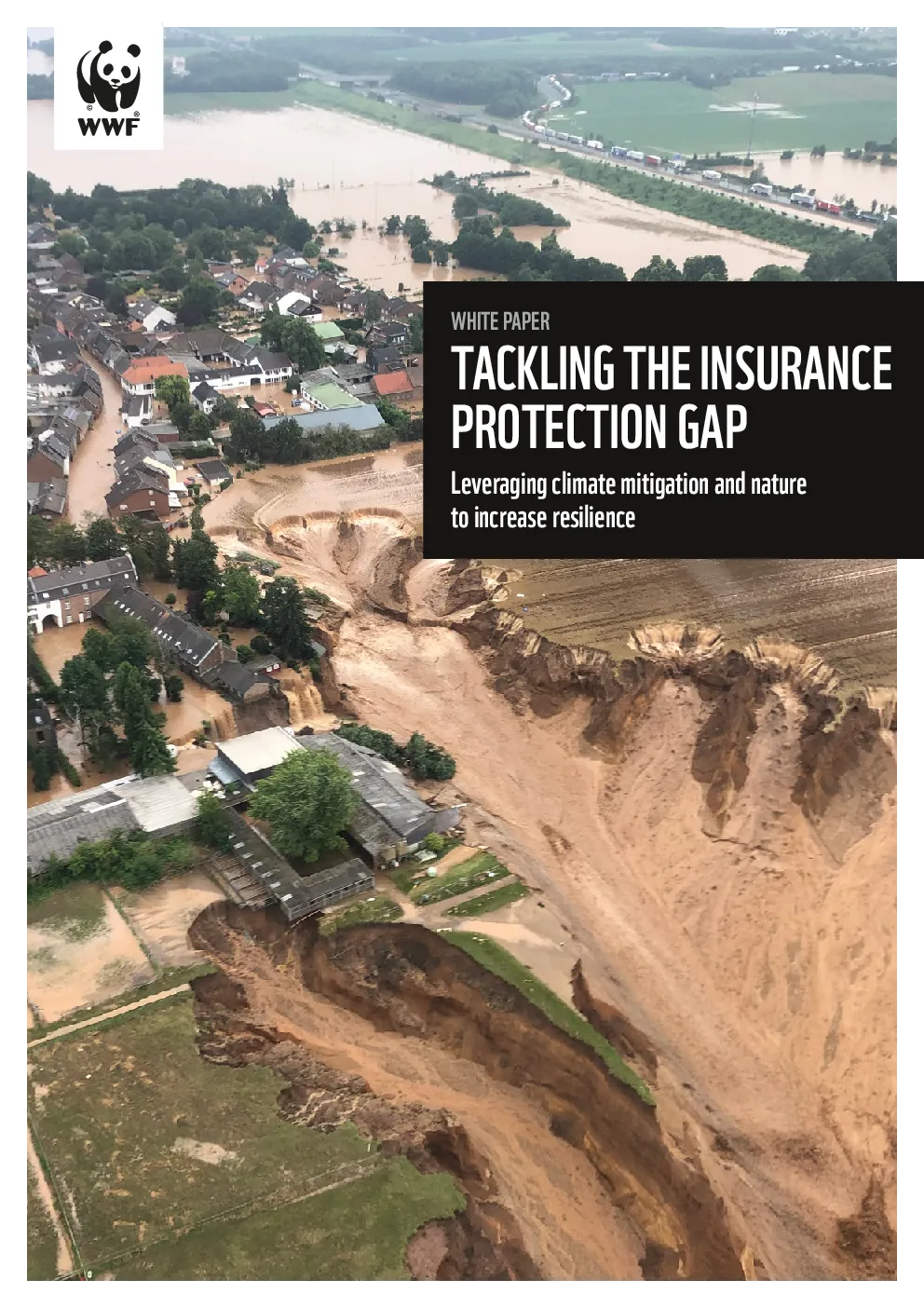
PROTECTION GAP Leveraging climate mitigation and natureto increase resilience 2|TACKLING THE INSURANCE PROTECTION GAP – FOCUS ON ADVANCED ECONOMIES Project Lead:ƒRegula Hess| WWF Switzerland Authors:ƒJérôme Crugnola-Humbert| Crugnola Humbert ConsultingƒRegula Hess| WWF SwitzerlandƒNitika Agarwal| WWF UKƒTeresa Gäckle| WWF AustriaƒDr. Katja Kirchstein| WWF GermanyƒDavid Kuhn| WWF USƒEd Steeds| WWF UKƒMia Wilke| WWF Switzerland External Advisory Group:Disclaimer: The individuals and organizations listed as members of the Advisory Group contributed their timeand expertise to inform the development of this Report.Their contributions were made in an advisorycapacity only and do not constitute authorship. Thecontent, findings and recommendations presented inthis Report are the sole responsibility of WWF anddo not necessarily reflect the views, positions or policiesof the Advisory Group members or their respectiveorganizations. ƒFelicity Alvey| Cambridge Institute for SustainabilityLeadershipƒButch Bacani| UNEPƒProf. Enrico Biffis| Imperial Business SchoolƒProf. Marc N. Conte| Fordham UniversityƒAnnia Costermani Visconti| NatureFinanceƒChip Cunliffe| Ocean Risk and Resilience ActionAllianceƒRowan Douglas| Howden Group HoldingsƒEsther Egeter| a.s.r.ƒDeborah Halberstadt| California Department ofInsuranceƒDanielle Imperato| GeneraliƒAdrian von Jagow| WU Vienna University ofEconomics and BusinessƒDave Jones| UC BerkeleyƒJonathan Kassian| Flood ReƒDr. Hazem Krichene| Group Economic Research –Allianz Investment Management SEƒArend Kulenkampff| NatureFinanceƒJoanne Linnerooth Bayer| IIASAƒDaphne McRae| European Climate FoundationƒTomé Pedroso| FidelidadeƒProf. Nicola Ranger| London School of EconomicsƒDavid Rochester| Flood ReƒKate Stein| Environmental Defense FundƒProf. Swenja Surminski| Marsh McLennan / LSE / MCIIƒRaphaëlle Vallet| OAK GlobalƒBert Vandewalle| AG InsuranceƒBouke de Vries| IndependentƒDaniel Wraith| European Climate Foundation We also thank the following colleagues for theirinsights and feedback: WWF Belgium:Koen Stuyck;WWF European PolicyOffice:Sebastien Godinot, Dominyka Nachajute;WWF Germany:Jochen Krimphoff;WWF Greece:Constantinos Liarikos;WWF International:ElisaVacherand, Aaron Vermeulen;WWF Nepal:SandeepChamling Rai;WWF Netherlands:Chayanika Perera,Christine Wortmann;WWF Switzerland:Maud Abdelli,Carolin Carella, Amandine Favier, Patrick Hofstetter,Stephanie Huber, Stephan Kellerberger, Nicola Lei-Ravello, Dominik Rothmund, Thomas Wirth;WWF UK:Alexandre Chausson, Karen Ellis, Josephine Quint;WWF US:Elizabeth Aceituno, Oliver Ames, Laura Brush,Andrew Deutz Editing by:Mark Nicholls| MRG Comms Ltd Production and design:The Corner Shop Creative Cover Image:Major landslide and flooding in theBlessem district of Erftstadt, Germany, during the 2021floods. Image: ©Daniel Schlich WWF Switzerland:The mission of WWF is to stop the global destruction of the environment and shape a future in which peopleand nature can live together in harmony. In order to fulfilthis mission, WWF is dedicated to preserving globalbiodiversity. WWF also fights to reduce the use of naturalresources to a sustainable level. In order to meet itsobjectives, WWF works at four levels: in the field, withcompanies, in the political arena and with the population.WWF regularly performs company ratings and thusassesses the sustainability performance of companies inimportant sectors. CONTENTS EXECUTIVE SUMMARY This report analyses how climate change and nature loss are undermining insurabilitywidening the global insurance protection gap and sets out policy solutions to strengthenresilience for households, businesses and governments. It is directed at governments, policymakers, financial regulators and the insurance sector, highlighting the need to address theroot causes of risk – climate change and nature loss – to ensure societies remain insurable. Modern economies depend upon insurance as a cornerstone foreconomic development and financial stability. By enabling thetransfer or risk, insurance protects households and businessesfrom financial shocks, supports faster and fairer recovery afterdisasters, and underpins long-term investment. The insurance gap is an even more serious problem in developingeconomies, where it stands at above 90 per cent. However,given the different challenges they face, this report focuseson analysis of and recommendations for developed countries. Traditional models of insurance are struggling to respondand cannot provide the necessary coverage for increasingrisks without government intervention, even in countries withtraditionally high insurance penetration. With a changingclimate, past data can no longer reliably forecast future losses,creating a challenge for insurers who use historical trends toassess and price risk. Climate risk is also affecting wider anddifferent geographic areas, creating new vulnerabilities foroften unaware populations and businesses. INCREASED TEMPERATURES AND THE DEGRAD