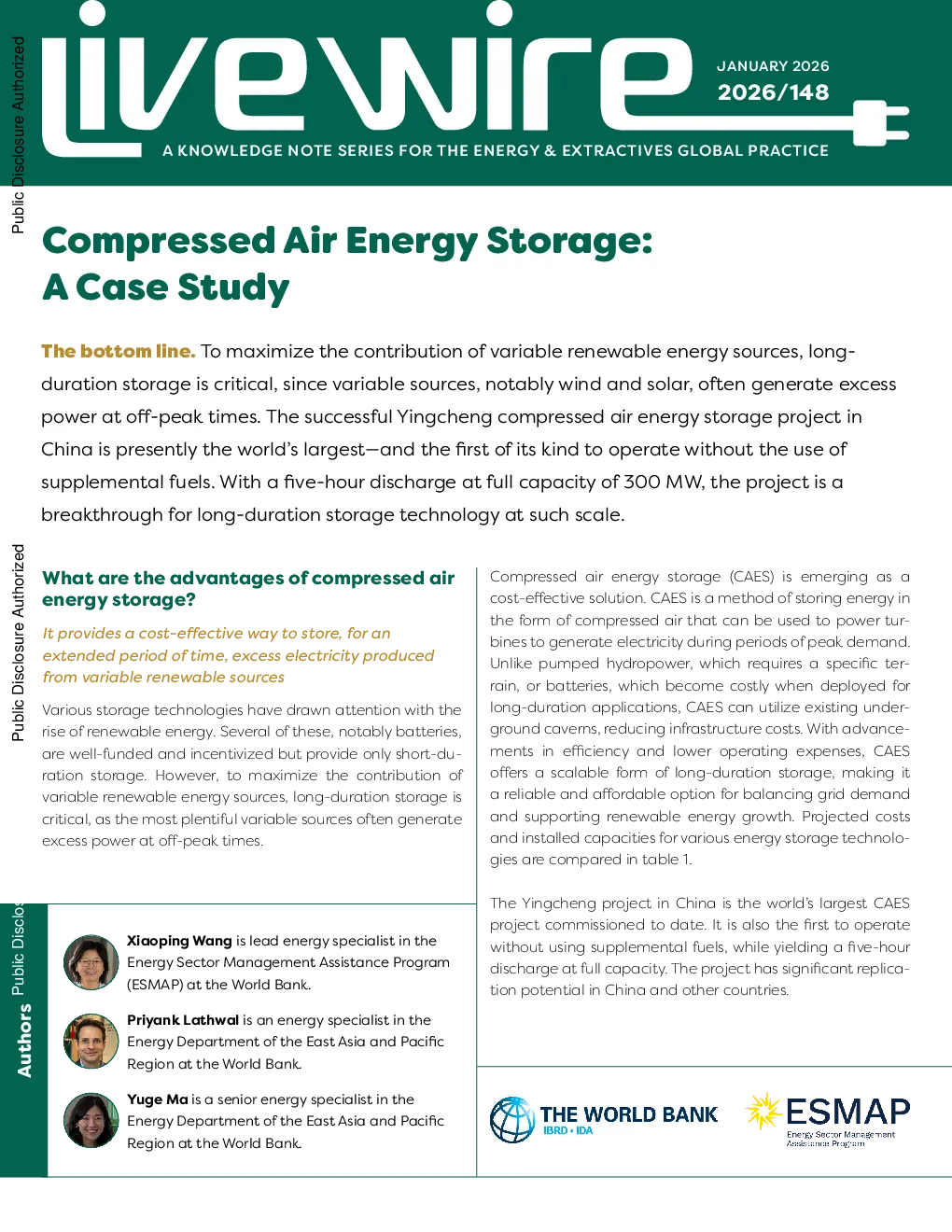
Compressed Air Energy Storage (CAES) is emerging as a cost-effective solution for long-duration energy storage, crucial for maximizing the contribution of variable renewable energy sources like wind and solar. The Yingcheng CAES project in China, the world's largest and first to operate without supplemental fuels, demonstrates the viability of CAES at scale. With a 300 MW capacity and a five-hour discharge, the project offers a scalable and affordable option for balancing grid demand and supporting renewable energy growth.
Advantages of CAES:
- Provides cost-effective long-duration storage for excess electricity from variable renewable sources.
- Utilizes existing underground caverns, reducing infrastructure costs compared to pumped hydro storage or batteries.
- Offers a scalable form of long-duration storage with advancements in efficiency and lower operating expenses.
Market Context:
- The global CAES market was modest before the Yingcheng project, with a worldwide installed capacity of approximately 1,500 MWh before 2024. The project doubled this capacity upon its commissioning.
- The World Bank played a pivotal role in the Yingcheng project's success through co-financing, risk management advice, and promoting global best practices.
China's Energy Storage Strategy:
- China began experimenting with CAES a decade ago, driven by increasing variable renewable energy penetration.
- The 2020 Nationally Determined Contributions under the Paris Agreement call for accelerated energy storage development to decarbonize the economy.
Yingcheng Project Distinctives:
- Incorporates advanced technology, repurposing decommissioned salt caverns for storage.
- Achieves a system conversion efficiency of approximately 70%, storing energy for eight hours and discharging it over five hours daily.
- Prioritizes stakeholder engagement and implements rigorous environmental impact assessments.
Comparison with Other Technologies:
- CAES outperforms lithium-ion batteries in long-duration applications, with a levelized cost of storage between RMB 0.6–0.8/kWh for durations of 6–12 hours.
- Closely rivals pumped hydro storage in cost but offers faster construction periods (18 months vs. 6–8 years).
Challenges to Expansion:
- Technical complexity, requiring advanced engineering and precise geological assessments.
- High initial investment costs, despite long-term benefits.
- Early-stage business models and market mechanisms, with limited compensation for energy storage services.
Outcomes and Future Prospects:
- The Yingcheng project supports China's renewable energy goals, offers a replicable model, and enhances global recognition of CAES.
- CEEC plans to further improve technologies and experiment with larger-scale projects, including collaborations with salt-mining companies.
- The global CAES market holds potential in the hundreds of billions of dollars, driven by growing interest from investors and financiers.