您的浏览器禁用了JavaScript(一种计算机语言,用以实现您与网页的交互),请解除该禁用,或者联系我们。 [阿拉伯可持续发展论坛]:加速实现SDG6包容性实施:在阿拉伯地区改善有韧性的水资源安全:背景说明 - 发现报告

加速实现SDG6包容性实施:在阿拉伯地区改善有韧性的水资源安全:背景说明

2026-05-27 - 阿拉伯可持续发展论坛 张博卿
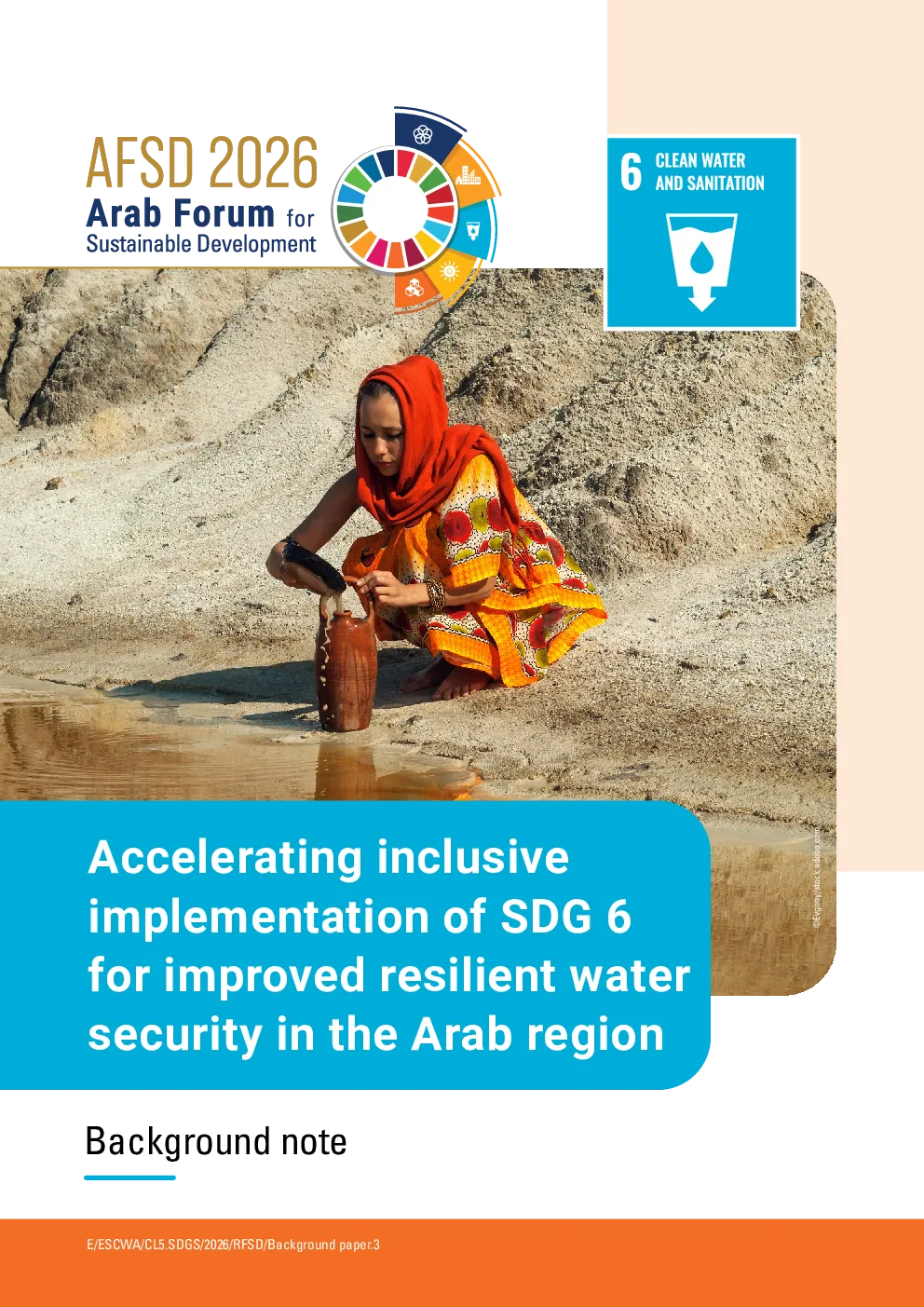
报告封面

Accelerating inclusiveimplementation of SDG 6for improved resilient watersecurity in the Arab region Background note 74% 223M 54.7%sanitationservicesin 2024, up from44.7% in 2015 129M access tosafelymanageddrinking waterin 2024, up from70.1% in 2015 lack safelymanagedsanitationservices lack accessto basic waterservices Since 2015, the Arab region has made notableprogress towards improving access to safewater and sanitation services for all, butconflict has threatened these advances andexposed new vulnerabilities. ESCWA memberStates have made significant investments inwater, wastewater and desalination facilitiesto address the impacts of various stresses,including climate change, on growing waterscarcity. However, these facilities areparticularly susceptible to attacks in timesof war as evidenced by recent damage todesalination facilities in the Gulf. Furthermore,water infrastructure has been severelyimpacted across the Levant and the Sudanowing to past and ongoing conflict. Goingforwards, sustaining and advancing progresstowards SDG6 will require the design andimplementation of resilient water and sanitationinfrastructure and governance systems capableof withstanding a wide range of threats. Increasing the portion of the region’spopulation with access to safely manageddrinking water from 70.1percent in 2015 to74percent in 2024. Increasing the share of the populationusing safely managed sanitationservices from 44.7percent in 2015 to54.7percent in 2024. Nonetheless, there is significant needfor improvement as more than 129millionpeople in the region still lacked access tobasic drinking water services in 2022, and223million people have lacked access tosafe sanitation services since 2024.1 Closing this achievement gap willrequire significant investment not only ininfrastructure but also appropriate trainingand capacity-building for water governance.Water diplomacy and the adherence tointernational law that protects water suppliesin times of conflict are also essential. The main markers of SDG6 achievement todate include the following: Baseline assessment While the proportion of the region’spopulation with access to safely manageddrinking water services rose four percentage Achieve universal and equitableaccess to safe and affordabledrinking water for all (SDG target6.1) by 10 percentage points to 54.7percentbetween 2015 and 2024.4Nonetheless,45.3percent of the population (223millionpeople) remain without access to safesanitation services.5Access to overallbasic sanitation has improved from82percent in 2015 to 89percent in 2022,with marked rural-urban disparities.6 points between 2015 and 2024, 26.2percent ofthe population (around 129million people) inthe Arab region lack access to safe drinkingwater resources.2,3 Achieve access to adequate andequitable sanitation and hygienefor all and end open defecation,paying special attention to the needsof women and girls and those invulnerable situations (SDG target6.2) In terms of hygiene services, 14percent ofthe population (70.7million people) remainwithout access to basic handwashingfacilities.7Open defecation has been largelyeliminated, declining fourfold since 2000, withonly 2.9percent of the population engagingin this practice in 2024.8 In terms of sanitation, the Arab regionhas seen significant gains, with theshare of the population using safelymanaged sanitation services increasing average of $21.4percubic meter in 2022.11,12There are also notable disparities within theregion on this target: water-use efficiencyin high-income countries was significantlyhigher at $45.1percubic meter comparedwith both middle-income and low-incomecountries with water-use efficiency at $7 and$2.2percubic meter, respectively.13 Improve water quality by reducingpollution, eliminating dumping andminimizing release of hazardouschemicals and materials, halvingthe proportion of untreatedwastewater and substantiallyincreasing recycling and safe reuseglobally (SDG target6.3) While water scarcity is the most frequentlyaddressed challenge in the Arab region,water quality is also a critical concern.Since 2023, 4out of 10water bodies havebeen classified as having poor waterquality.9However, since 2024, the Arabregional average for safely treated domesticwastewater flows stood at 63.2percent,above the global average of 55.8percent.10Efforts are being made to increase theproportion of treated wastewater andits reuse, given its importance as asupplemental resource. Water stress has increased over the lastdecade as levels of freshwater withdrawalsas a proportion of available freshwaterresources in Arab countries reached114percent in 2022, a 13percent increasefrom 2015. The Arab region average isconsiderably greater than the globalaverage of 18percent.14 Implement integrated waterresources management at all levels,including through transboundarycooperation as appropriate(SDG target6.5) Substantially increase water-useefficiency across all sectors andensure sustainable with