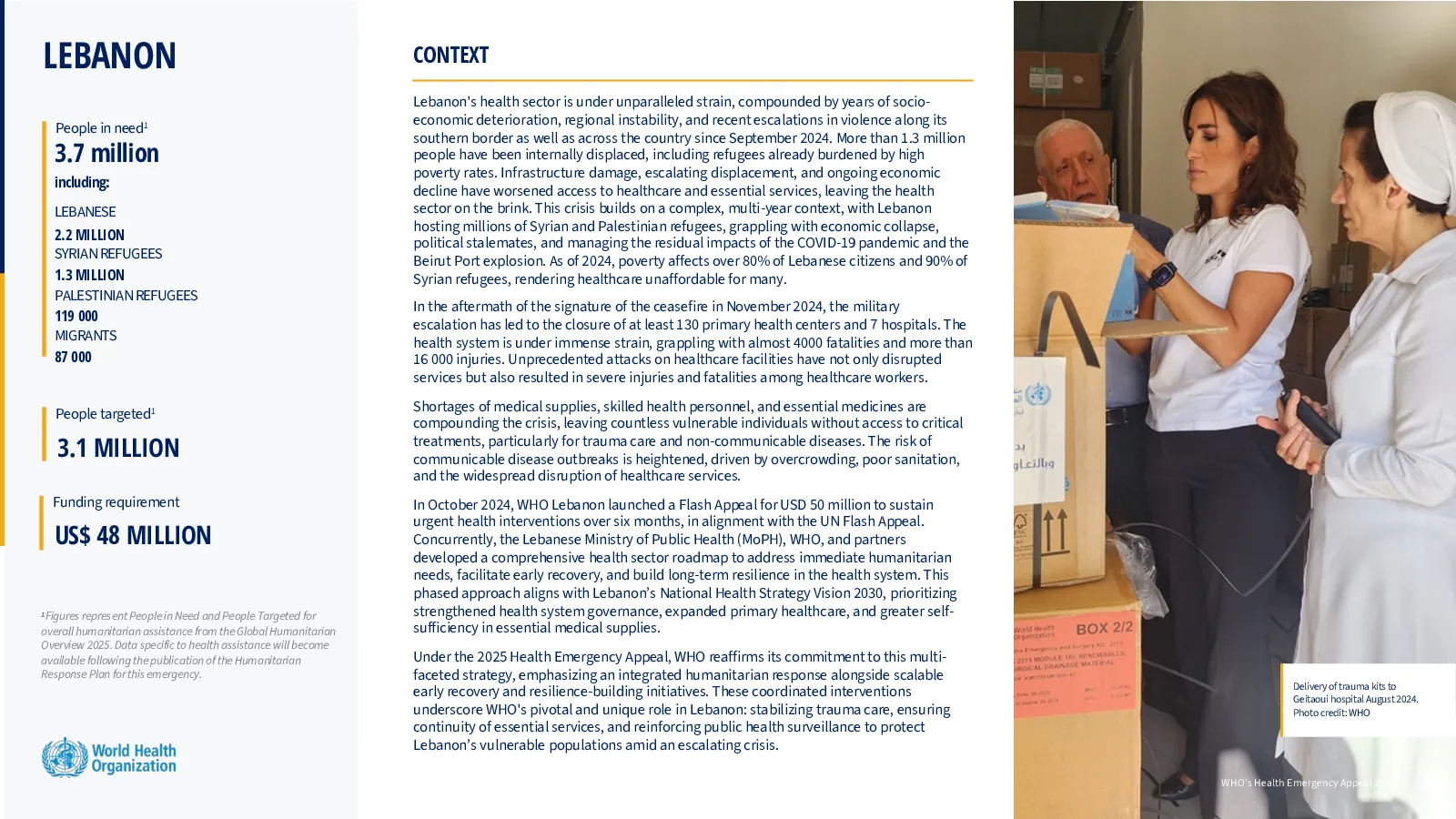
Lebanon's health sector is facing an unprecedented crisis due to years of socio-economic deterioration, regional instability, and recent escalations in violence. The situation has been exacerbated by the displacement of over 1.3 million people, damage to infrastructure, and a severe economic decline, leaving the health system on the brink of collapse. As of 2024, over 80% of Lebanese citizens and 90% of Syrian refugees live in poverty, making healthcare unaffordable for many. The closure of at least 130 primary health centers and 7 hospitals following the ceasefire in November 2024 has further strained the health system, which has already recorded nearly 4,000 fatalities and over 16,000 injuries. Shortages of medical supplies, skilled health personnel, and essential medicines are widespread, leaving vulnerable populations without access to critical treatments.
Key Data
- People Targeted: 13.1 million
- People in Need: 13.7 million (including 2.2 million Lebanese, 1.3 million Syrian refugees, 119,000 Palestinian refugees, and 87,000 migrants)
- Funding Requirement: US$ 48 million
Context
Lebanon has been hosting millions of Syrian and Palestinian refugees while grappling with economic collapse, political stalemates, and the residual impacts of the COVID-19 pandemic and the Beirut Port explosion. The health sector is under immense strain, with healthcare facilities operating at full capacity and attacks on these facilities causing severe disruptions and casualties among healthcare workers.
WHO's Strategic Objectives
- Strengthening Integrated Disease Surveillance: Focus on cholera response through WASH interventions and coordinated vaccination efforts to mitigate potential outbreaks.
- Ensuring Scalable Clinical Care: Enhance trauma care, essential medical supplies, and surge support at critical health facilities.
- Strengthening Community Engagement: Restore health infrastructure, expand primary care access, and support essential services for trauma care, chronic disease management, and mental health.
- Enhancing Health Emergency Preparedness: Support public health governance, digital health infrastructure, and promote universal health coverage.
WHO's 2025 Response Strategy
The strategy prioritizes a comprehensive, phased approach addressing urgent humanitarian health needs while building long-term resilience. Key initiatives include:
- Stabilizing Healthcare System: Providing trauma kits, medical supplies, and essential resources to frontline hospitals.
- Sustaining Essential Healthcare Services: Expanding support for primary healthcare centers and mobile units delivering mental health, non-communicable disease management, and maternal and child health services.
- Early Recovery Efforts: Restoring critical health infrastructure and addressing workforce shortages through training and surge capacity support.
- Long-Term Resilience Efforts: Developing local production of essential medicines, supporting digital health systems, and enhancing health financing mechanisms.
Key Activities for 2025
- Strengthening disease surveillance by training healthcare workers and creating a unified "One Health" platform.
- Enhancing laboratory capacity by upgrading laboratories and establishing a robust external quality assurance program.
- Improving emergency response capabilities by distributing trauma kits.
- Expanding mental health support by training healthcare workers.
- Ensuring continuity of essential healthcare by supporting patients with chronic medications.
- Building frontline healthcare capacity by training health workers in trauma care and mass casualty management.
Achievements in 2024
- Public Health Emergency Operations Center (PHEOC): Coordinated Lebanon's emergency health response during the Beirut explosion, ensuring functional emergency rooms and efficient logistics for injured victims.
- Training and Preparedness: Formulated emergency plans for cholera, mpox, and trauma, and conducted extensive training in mass casualty management for over 5,600 healthcare workers.
- Partnership with MoPH: Built assessment and reporting tools within DHIS2, enhancing data capture and sharing with stakeholders.
2025 Funding Requirements
The funding requirements are structured around the Emergency Response Pillar, with key areas including collaborative surveillance, safe and scalable care, case management and therapeutics, essential health systems and services, and operational support and logistics. The total funding requirement is US$ 48,051,000.
Conclusion
Lebanon's health sector is in critical need of support to address immediate health needs and build long-term resilience. WHO's multi-faceted strategy aims to stabilize the healthcare system, expand access to critical services, and foster collaboration with the Ministry of Public Health and partners to ensure a coordinated and impactful response.