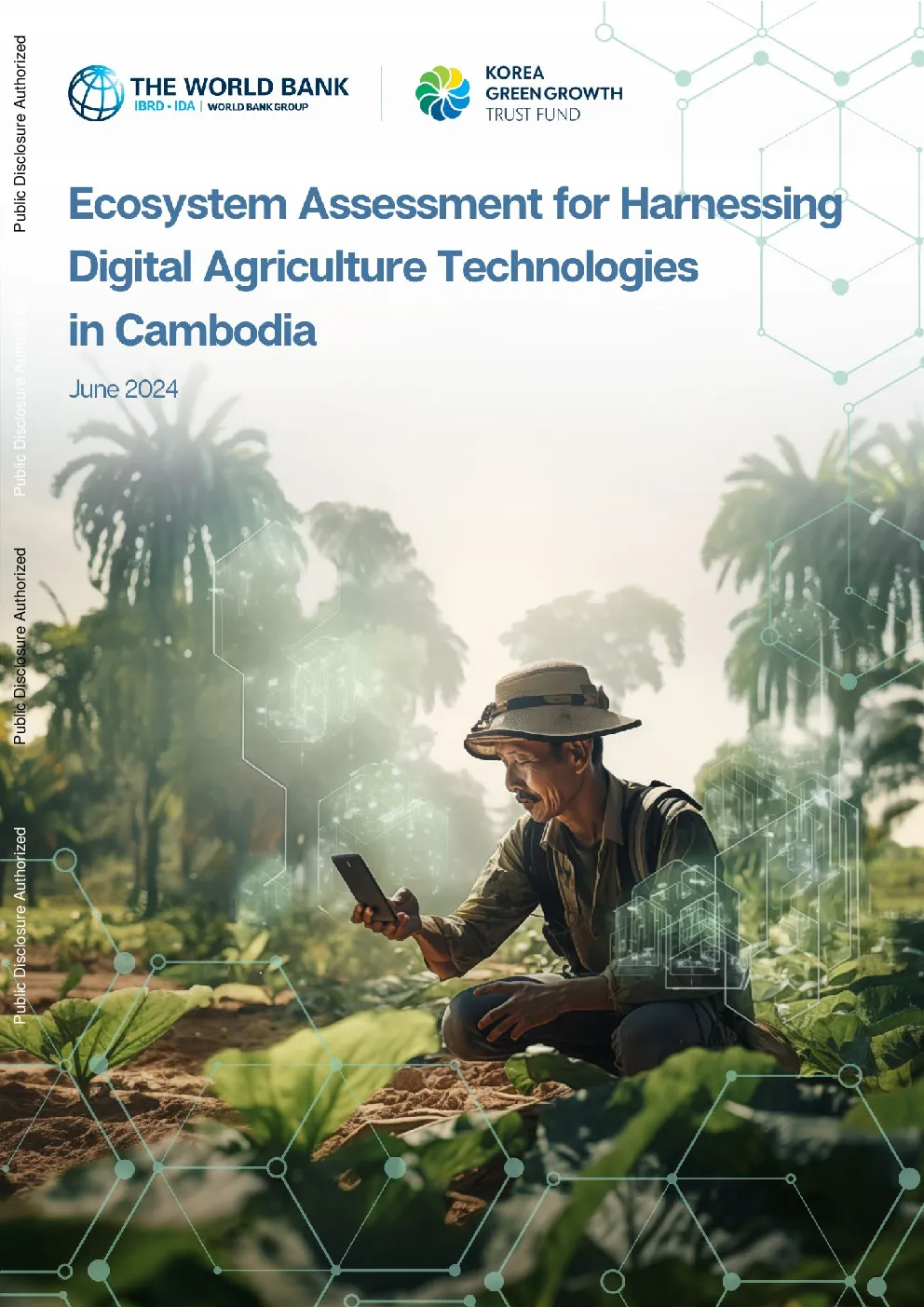
Ecosystem Assessment for Harnessing Digital Agriculture Technologies in Cambodia
Executive Summary
This comprehensive study aims to create a Digital Agriculture Profile (DAP) for Cambodia, focusing on evaluating and highlighting agriculture policies and investments to boost the growth of Digital Agriculture Technologies (DAT). Supported by the Korea Green Growth Trust Fund (KGGTF), a partnership between the World Bank Group (WBG) and the Republic of Korea, the project is dedicated to innovative and sustainable growth strategies and investments, particularly in greening post-COVID recovery efforts and supporting multi-sectoral initiatives for Green, Inclusive, and Resilient Development (GRID).
Key points include:
- Overview of the Agricultural Sector: Contributions of agriculture to the national economy, emphasizing the role of rice cultivation.
- ICT Sector's Performance: Analysis of the Information and Communication Technology (ICT) sector's role in supporting agricultural advancements.
- Government Policies and Strategies: Examination of governmental initiatives aimed at integrating digital technologies into agriculture.
- Opportunities and Challenges: Identification of potential benefits and obstacles within the agricultural sector.
Chapter 1: Introduction
- Overview of the Agricultural Sector: Highlights the importance of agriculture in Cambodia's economy, with a focus on rice production.
- ICT Sector’s Performance: Discusses the current state of ICT infrastructure and its accessibility in rural areas.
- Government Policies and Strategies: Outlines policies that aim to leverage technology for agricultural development.
- Opportunities and Challenges: Analyzes both the potential for growth and existing hurdles in implementing digital agriculture technologies.
Chapter 2: DAT Assessment
- Digital Technology Landscape: Maps out the ecosystem of digital technologies relevant to agriculture in Cambodia.
- Key Actors: Identifies stakeholders including farmers, technology providers, and government agencies.
- DAT Development: Tracks the progress and impact of digital technologies in agriculture.
- Policies, Technologies, and Human Capital Readiness: Evaluates the regulatory environment, technological infrastructure, and human resource capacity.
Chapter 3: Digital Products and Services in Cambodia
- Access to Services: Discusses availability and access to agricultural services facilitated by digital technologies.
- Access to Markets: Explores how digital tools enhance market access for farmers.
- Access to Assets: Analyzes the use of digital platforms in managing and accessing agricultural assets.
Chapter 4: Selected DAT Applications and Solutions in Cambodia
- Agri-Tech Solutions and Models: Provides examples of successful digital agriculture applications.
- Scale-Up Potential: Highlights three solutions with significant potential for broader adoption.
- Climate-Smart Solutions: Focuses on technologies that improve resilience against climate change.
- Market Linkages: Discusses digital platforms improving connections between farmers and markets.
- E-Extension Services: Emphasizes remote learning and advisory services to enhance farming practices.
Chapter 5: Conclusion and Recommendations
- Conclusion: Summarizes findings and insights from the assessment.
- Recommendations: Offers strategic suggestions for policy makers, investors, and practitioners to accelerate the adoption and effectiveness of digital agriculture technologies in Cambodia.
The study underscores the need for a collaborative approach involving the government, private sector, and international partners to effectively harness digital technologies for agricultural development in Cambodia.