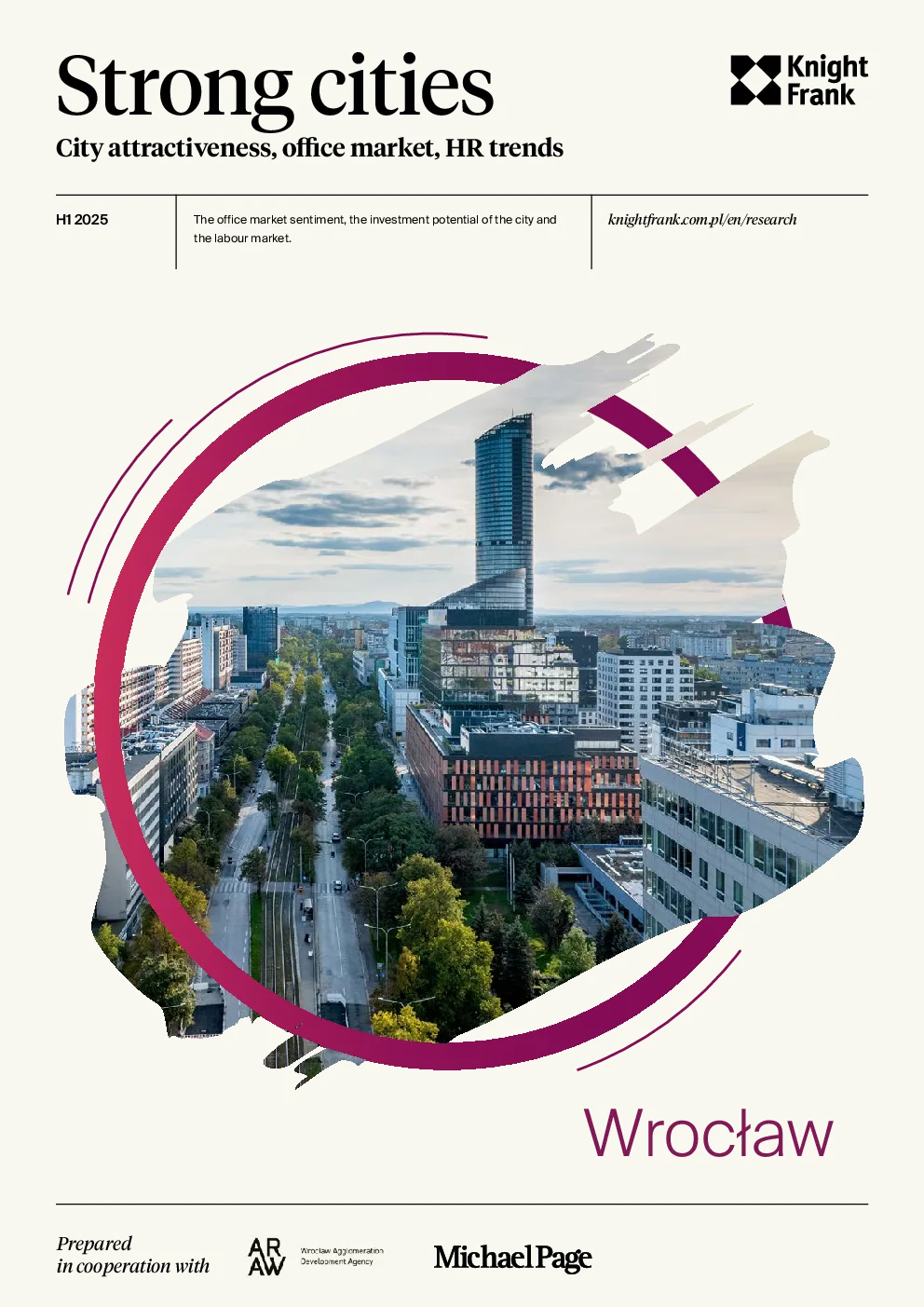
Wrocław City Attractiveness and Office Market Overview
City Attractiveness:
- Demographics and Economy: Wrocław has a population of 893,500, with a GDP growth rate of 8.5% and an average gross salary of PLN 9,409.40. The city covers 293 sq km, with a GDP per capita of PLN 104,360.
- Investment Attractiveness: Wrocław ranks 2nd in Poland and 8th globally in the fDi’s Mid-Sized European Cities of the Future 2025 for business friendliness and overall economic potential. Key incentives include real estate tax exemptions, "One stop shop" investment support, and access to Lower Silesian Special Economic Zones.
- Quality of Life: The city boasts 1,400 km of bike paths and ~41% green areas. It ranks 1st in fDi’s Mid-Sized European Cities of the Future 2024 for human capital and lifestyle, with 106,000 students and 30 universities educating over 105,000 students, 42,000 of whom are in R&D-related fields.
Research and Development Potential:
- R&D Sector: Wrocław has 11% of Poland’s R&D companies, with diverse fields including engineering, IT, chemicals, energy, and medicine. The city hosts 70 research centers and departments, including 13,600 in R&D centers.
- Start-ups and Human Resources: Wrocław leads Poland in start-ups, with 28% of all Polish start-ups in Lower Silesia. Sixty percent of companies rate the availability of qualified R&D specialists as good or very good, supported by internship programs at companies like Selena and LG Energy Solution Wroclaw.
Office Market:
- Supply and Demand: As of H1 2025, Wrocław’s office stock reached 1.36 million sq m, with 25,000 sq m under construction. Demand remains strong, with 81,000 sq m leased in H1 2025, a 53% increase year-on-year. IT sector accounts for over 26% of leased space.
- Vacancy and Rents: The vacancy rate reached 20.5% in June 2025, up 2.1 pp from the previous year. Asking rents range between EUR 11.00 and 16.00/sq m/month, with prime spaces potentially exceeding this range. Service charges range from PLN 16.00 to 31.00/sq m/month.
HR Trends:
- Pay Transparency Directive: Starting December 2025, Polish companies must disclose salary levels or ranges in job ads, report gender pay gaps, and ensure employee access to salary information for comparable positions. However, implementation challenges and ambiguities may limit effectiveness.
- Gender Pay Gap: Nearly 40% of women believe pay disparities persist for similar roles, with the real estate sector showing minimal gaps due to transparent compensation practices. The employment rate for women is 15 percentage points lower than men, with significant challenges in gender pay gap and promotion access.
- Demographic Decline: By 2035, Poland’s workforce is expected to decrease by 2.1 million (12%), highlighting the need to attract new talent and activate women in the labor market.
Conclusion:
Wrocław remains a highly attractive city with strong economic growth, quality of life, and R&D potential. The office market shows robust demand but faces rising vacancy rates, with rents and service charges remaining stable. The upcoming Pay Transparency Directive presents both opportunities and challenges, with effective implementation being crucial for talent attraction and gender equality. The city’s demographic challenges necessitate proactive strategies to activate underrepresented groups in the labor market.