Hydrogen's Role in Heavy-Duty Trucking: An Overview
Introduction
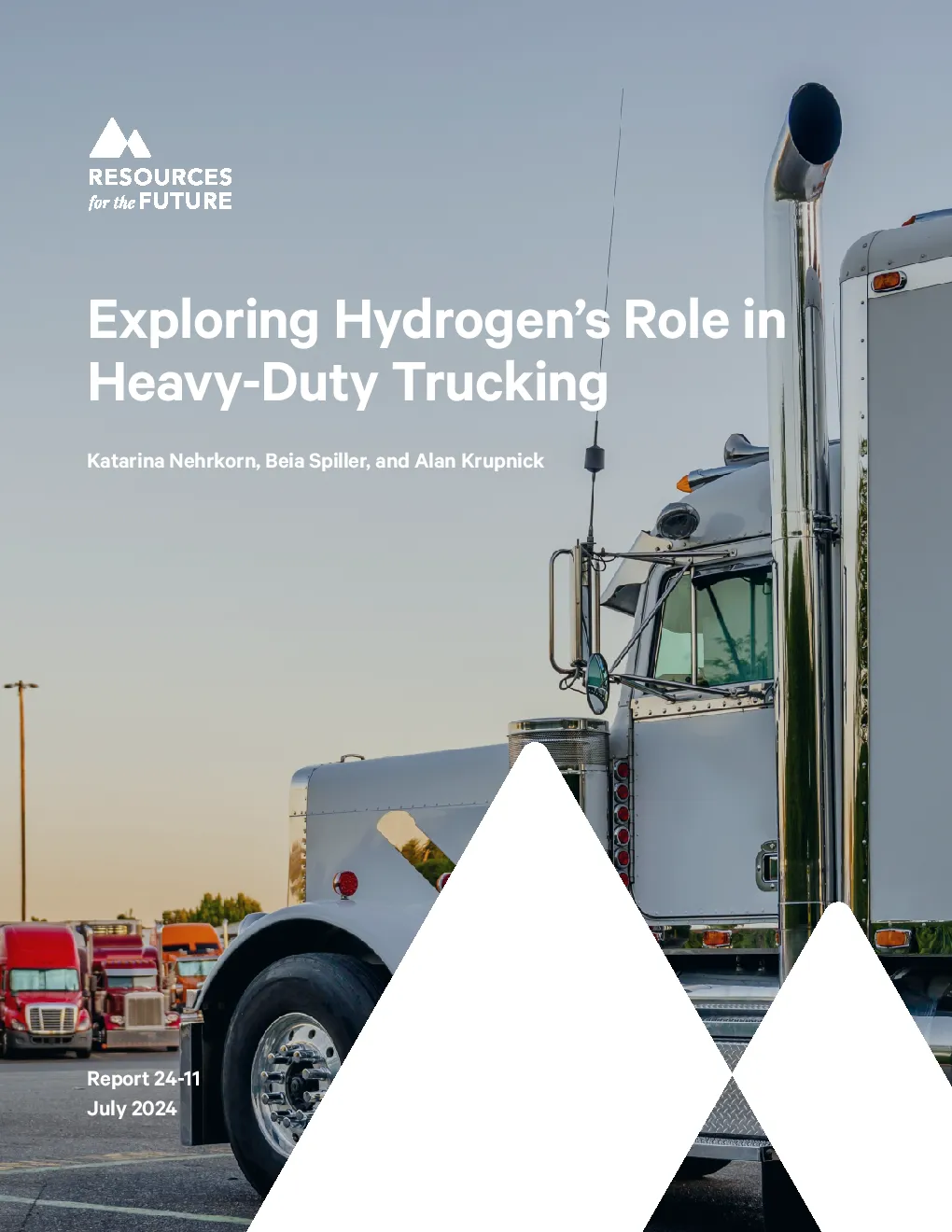
Clean hydrogen (H2) fuel plays a pivotal role in decarbonizing the heavy-duty transportation sector, which is a significant contributor to anthropogenic CO2 emissions in the United States. This sector, encompassing vehicles with a gross vehicle weight rating exceeding 26,010 pounds, includes a variety of commercial vehicles such as drayage trucks, short and regional day cabs, and long-haul Class 8 trucks. Given the demands for long-range capabilities and heavy payload capacity, decarbonization efforts in this sector face unique challenges.
How It Works
H2 can be utilized in heavy-duty transportation primarily through fuel cell electric vehicles (FCEVs) and H2 internal combustion engines (H2ICEs). FCEVs are the focus, as they represent the current and projected future use. FCEVs operate by splitting H2 into protons and electrons, generating electricity that powers the vehicle. This process, akin to batteries, involves an external circuit for electrons, producing only water and heat as tailpipe emissions.
The Status of Hydrogen-Fueled Heavy-Duty Vehicles
While H2 FCEVs are operational in public use, particularly in California, heavy-duty applications are in the commercial deployment phase. Companies like Nikola, Hyzon, Daimler, Volvo, and Hyundai are investing in H2 fuel cell trucks, with Nikola having recently delivered its first production run of 42 trucks, expecting to deliver up to 350 more in 2024. However, the fueling infrastructure remains nascent, with only 56 open retail stations nationwide, predominantly in California and catering mainly to light-duty vehicles. A limited number of refueling stations serve heavy- or medium-duty vehicles, though plans for expansion are underway.
Environmental, Environmental Justice, Cost, and Operational Considerations
Compared to diesel vehicles (the current standard) and battery electric vehicles (BEVs), which are gaining popularity, H2 FCEVs present environmental, environmental justice, cost, and operational considerations. While H2 FCEVs offer advantages in terms of efficiency and potential for zero-tailpipe emissions, the environmental impact of upstream emissions and the reliance on specific H2 production pathways (gray vs. green) necessitate careful consideration. The lifecycle emissions of H2 FCEVs are heavily influenced by the method of H2 production, with green H2 (produced from zero-carbon sources) offering a cleaner alternative. However, the environmental benefits are contingent on the additional nature of the clean energy used, as it might otherwise be allocated to other decarbonization efforts.
Key Challenges to H2 Deployment
Infrastructure development and fleet transition costs are among the key challenges to widespread H2 deployment. Infrastructure requirements for H2 fueling stations are substantial and require strategic planning. Additionally, the cost of transitioning existing fleets to H2 technology, including the acquisition of new vehicles and the potential need for retrofitting existing ones, poses financial barriers. The secondary truck market also presents challenges, as the demand for used H2-fueled vehicles may be limited compared to traditional diesel vehicles.
Policy Landscape
Policymakers have recognized the potential of H2 in heavy-duty transportation, with initiatives and regulations targeting its adoption. California leads in this area with specific policies, while federal policies also aim to support the development and deployment of H2 technologies. These policies are crucial in overcoming the aforementioned challenges and accelerating the transition to H2 in the heavy-duty sector.
Overcoming Challenges to Deployment
To overcome the challenges to H2 deployment, a multifaceted approach is necessary. This includes:
- Infrastructure Development: Investing in the development of a robust H2 fueling network tailored to the needs of heavy-duty vehicles.
- Funding and Incentives: Providing financial incentives and grants to encourage investment in H2 technology and infrastructure.
- Policy Support: Implementing supportive policies that promote the use of H2 in heavy-duty vehicles, including standards and regulations that favor decarbonized alternatives.
- Collaboration: Engaging stakeholders across industries, governments, and research institutions to share knowledge, resources, and best practices.
Conclusion
The integration of hydrogen into the heavy-duty transportation sector holds promise for decarbonization, but it requires addressing significant challenges related to technology, infrastructure, costs, and policy. Through strategic planning, collaboration, and targeted policy interventions, the potential of hydrogen in this sector can be harnessed effectively, contributing to a cleaner and more sustainable transportation future.