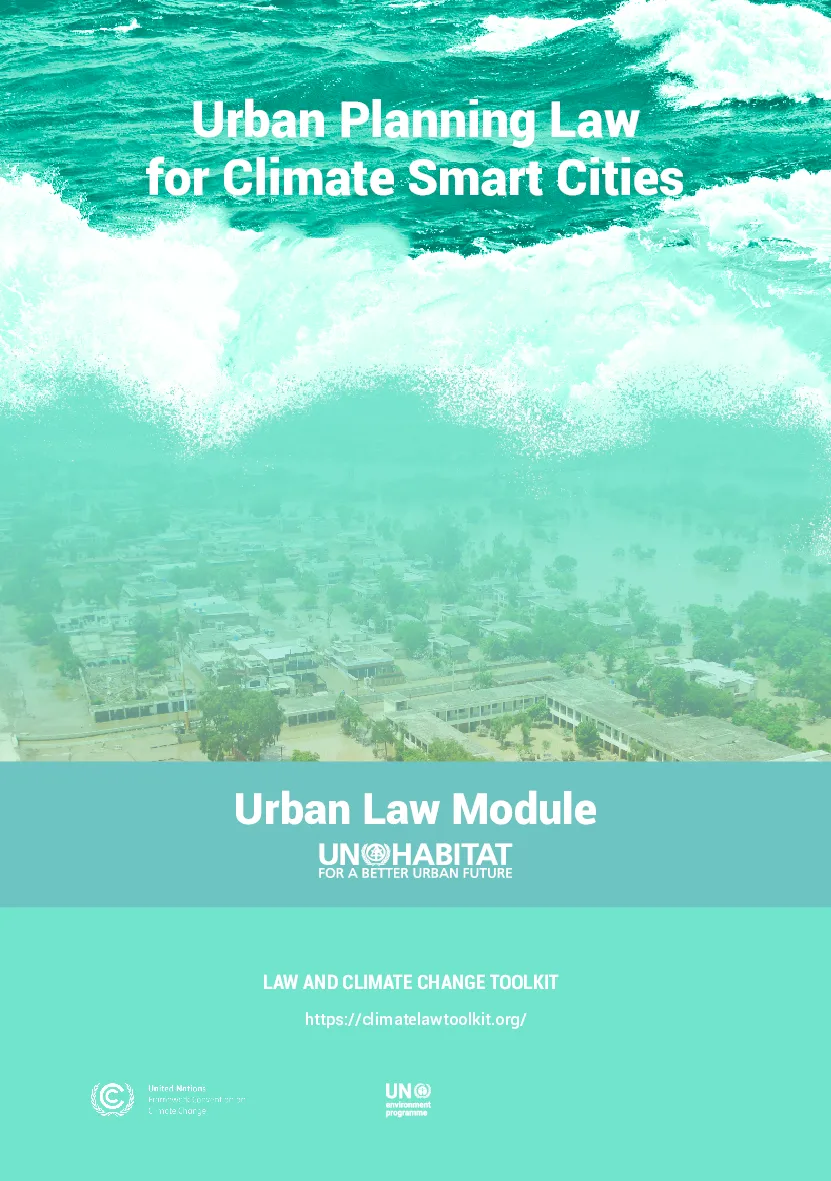
Urban planning law plays a crucial role in promoting climate-smart cities and addressing climate change. This document provides a comprehensive guide to integrating climate considerations into urban planning through legislative frameworks, governance structures, planning processes, and economic instruments. The key points can be summarized as follows:
1. Legal Framework and Climate Change
- Global Context: Cities contribute significantly to greenhouse gas emissions but are also highly vulnerable to climate impacts.
- Policy and Action: The Paris Agreement and Nationally Determined Contributions (NDCs) highlight the need for increased ambition in climate action, especially in urban settings.
2. Governance and Participation
- Multi-Level Coordination: Requires collaboration between national, sub-national, and local governments.
- Participatory Governance: Encourages community involvement in decision-making processes.
- Data Collection: Essential for understanding urban vulnerabilities and implementing adaptation and mitigation strategies.
3. Planning for Adaptation
- Risk Assessment: Identifies climate risks and vulnerabilities in urban areas and infrastructure.
- Adaptation Strategies: Focuses on implementing options that enhance resilience to climate change.
- Special Considerations: Addresses adaptation needs in slums and vulnerable settlements.
- Relocation and Tenure Security: Ensures planned relocations are sustainable and secure.
- Integration into Development Approvals: Incorporates climate adaptation strategies into development approval processes.
4. Planning for Mitigation
- Greenhouse Gas Emissions: Reducing emissions through urban plans and green initiatives.
- Urban Form: Promoting forms that reduce carbon footprints.
- Green Spaces: Enhancing environmental services and climate resilience.
- Neighborhood Design: Incorporating energy-saving measures in building designs.
5. Economic and Non-Economic Instruments
- Resources for Urban Planning: Provides financial and logistical support for climate-friendly initiatives.
- Incentives for Mitigation and Adaptation: Financial and policy mechanisms to encourage sustainable practices.
- Mitigating Factors: Identifies and addresses policies that undermine sustainable urban development.
Conclusion
This document serves as a comprehensive toolkit for urban planners and policymakers to integrate climate considerations into their work effectively. By focusing on governance, planning, economic instruments, and participation, it aims to facilitate the transition to climate-smart cities, ensuring that urban areas become more resilient and sustainable in the face of global climate challenges.