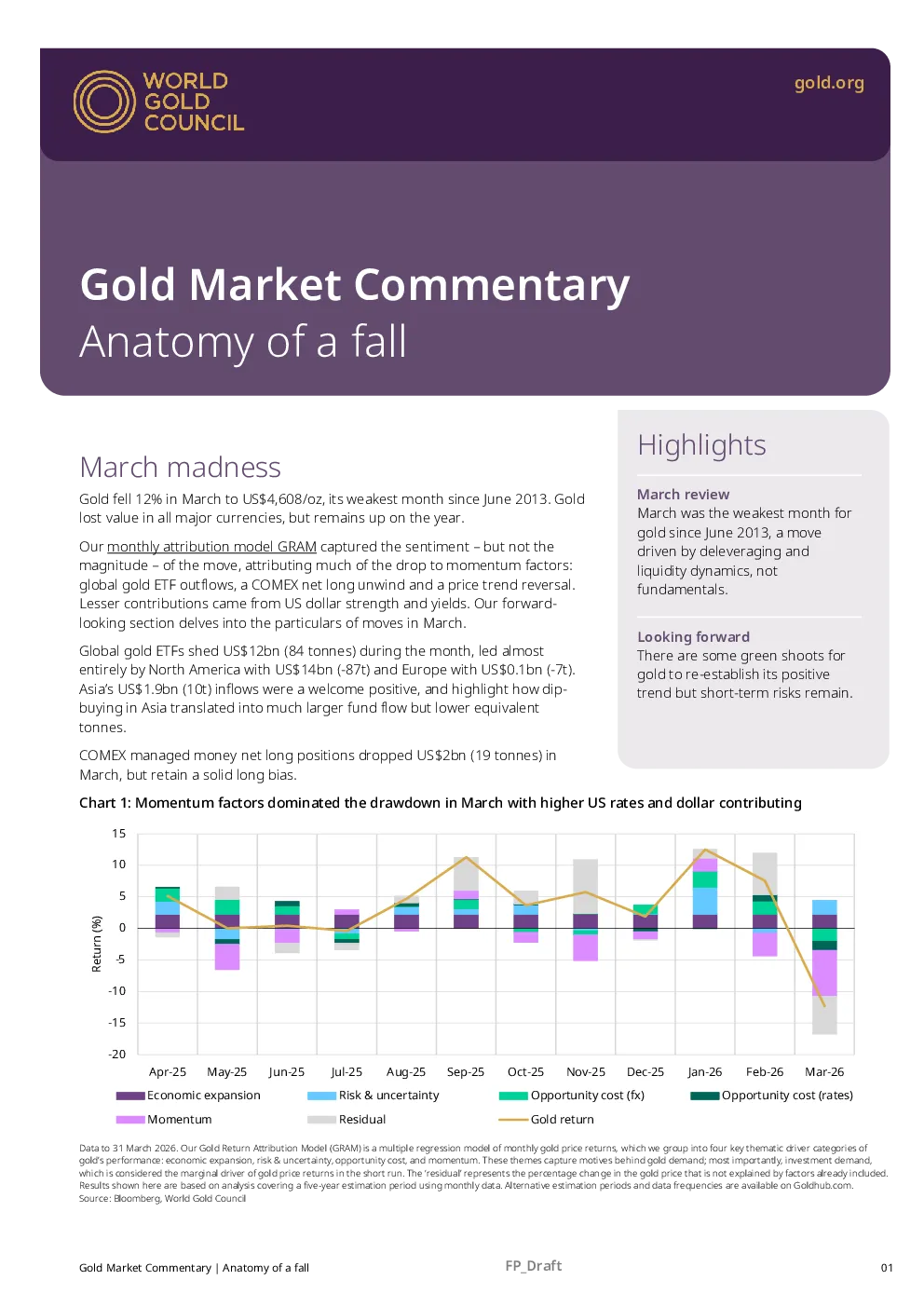
Highlights March madness Marchreview Goldfell12% in MarchtoUS$4,608/oz,itsweakest month sinceJune 2013.Goldlost value in all major currencies, but remains up on the year. March was the weakest monthforgold since June 2013, a movedriven by deleveraging and Ourmonthly attribution modelGRAMcaptured the sentiment–but not themagnitude–of the move,attributingmuchof thedrop tomomentum factors:global gold ETF outflows, a COMEX net long unwind andapricetrend reversal. Looking forward Global gold ETFs shed US$12bn (84tonnes)during the month, ledalmostentirelyby North AmericawithUS$14bn(-87t)andEurope withUS$0.1bn (-7t).Asia’sUS$1.9bn (10t)inflows were a welcomepositive,and highlighthow dip- There are some green shoots forgold to re-establish its positive COMEX managed moneynet longpositions droppedUS$2bn(19tonnes)inMarch,but retain a solidlong bias. Anatomy of a fall •Deleveraging and liquidity dynamics, not fundamentals,led the March sell‑off in gold •Disruptions to Middle East flows are unlikely to have had a •There are some green shootstoresuminggold’spositivetrend butshort-termrisks including central bank Sell what you can, not what you want Gold’s sell‑off during the first three weeks of March wassharp,counter‑intuitive, but not unprecedented.1It occurredagainst a backdropnormally supportive for gold: elevatedgeopolitical tensions and renewed inflation concerns. Theepisodeisa reminder that gold is not a contractual hedge.Prices rise only when incremental buyers exceed sellers. In Over the three weeks to 24 March2, gold appeared tooverreact to a conflict-led bounce in US real yields (Chart3). Global gold ETF flows by region, estimated US Commodity Trading Advisor (CTA) flows and the gold price* Fourth, bond market dynamicsreinforced the pressure. USbonds were soldon anearterm inflation shockwith2-year The dollar also rose but it was modest. Our weekly GRAM model reflected this dynamic with a 12%cumulative negative residual over the period. While realyields and the dollar undoubtedly contributed to net sales, Fifth, central bank intervention, and speculation aboutcentral banksales, may also have added to downward pricepressure.A decision by TheCentral Bank of the Republic ofTürkiye(CBRT) to use approximately 50t of gold as collateral,predominantly via swaps, may have fuelled rumours of First, positioning;A reportedbuild up in retail exposure togold riskeda flush out. COMEX Non-Reportable positions3,oftenassociatedwith retail exposure, saw a cumulative 18tnet drop during the first three weeks–in line with a 22t dropin Managed Money–reflectingmore institutional money.4A That this was liquidity driven and not achange in goldstrategy is backed up bydata at the US Fedsuggestingincreased outright selling of US Treasuries by central banks Second, CTA-driven sellinglikely amplified downsidemomentum. Estimated and anecdotally reported CommodityTrading Advisors (CTA) were very long heading intomid-March. They reportedly unwound positions sharply when Middle East flow disruption Disruptions tomarketactivity in parts of the Middle East areunlikely to have had a material impact on global gold prices Third, broader cross-asset deleveraginglikely spilled intogold. Elevated margin debt relative to market capitalisationprobably contributed to widespread equity selling, with allbut one sector in the S&P 500 (energy) posting declines.Against that backdrop, gold was not immune to liquidation Travel disruptions and lower tourist footfall weighedondemand for jewellery and small bars, particularly fromforeign buyers(Chart4)Local prices moved into a deeper Trading volumes in Dubai increased during the period, but atlevels insufficient to influence international prices.High‑net‑worth investorsellingwas also unlikely a feature in 5.TCMB Başkanı Karahan'dan altın kaynaklı işlemlerle ilgili açıklamalar | Son dakikaekonomi haberleri, 31 March 2026. outflowsseemmoreconsistent with relocation than While sovereign or quasi‑sovereign activity is one channelcapable of influencing global prices, there is–for now–no Overall, while regional disruptions may have affected localpricing and activity at the margin, they do not convincinglyexplain the scale or speed of the March sell‑off, which was Looking ahead: fundamentals reassert but risks remain •The dollar struggled to sustain gains and failed to pushmeaningfully beyond recent highs, reducing one source •EarlyApril ETF flowsinto goldhave beenpositive across •Options markets point to elevated near‑term hedgingdemand, but a more constructive bias further out the •Policy tightening is likely tobe rhetorical(in the US)andexpectations of hikes could get unwoundquickly.7Anyenergy driven CPI impulse is likely to result in demand •Anecdotal reports of wealth management, retail andphysical demand appearing on price stabilisation above However,risks remain.Should the conflictkeepoil priceswell in excess of US$100/bblfor an extended period–giventhat thesomewhatmuted resp