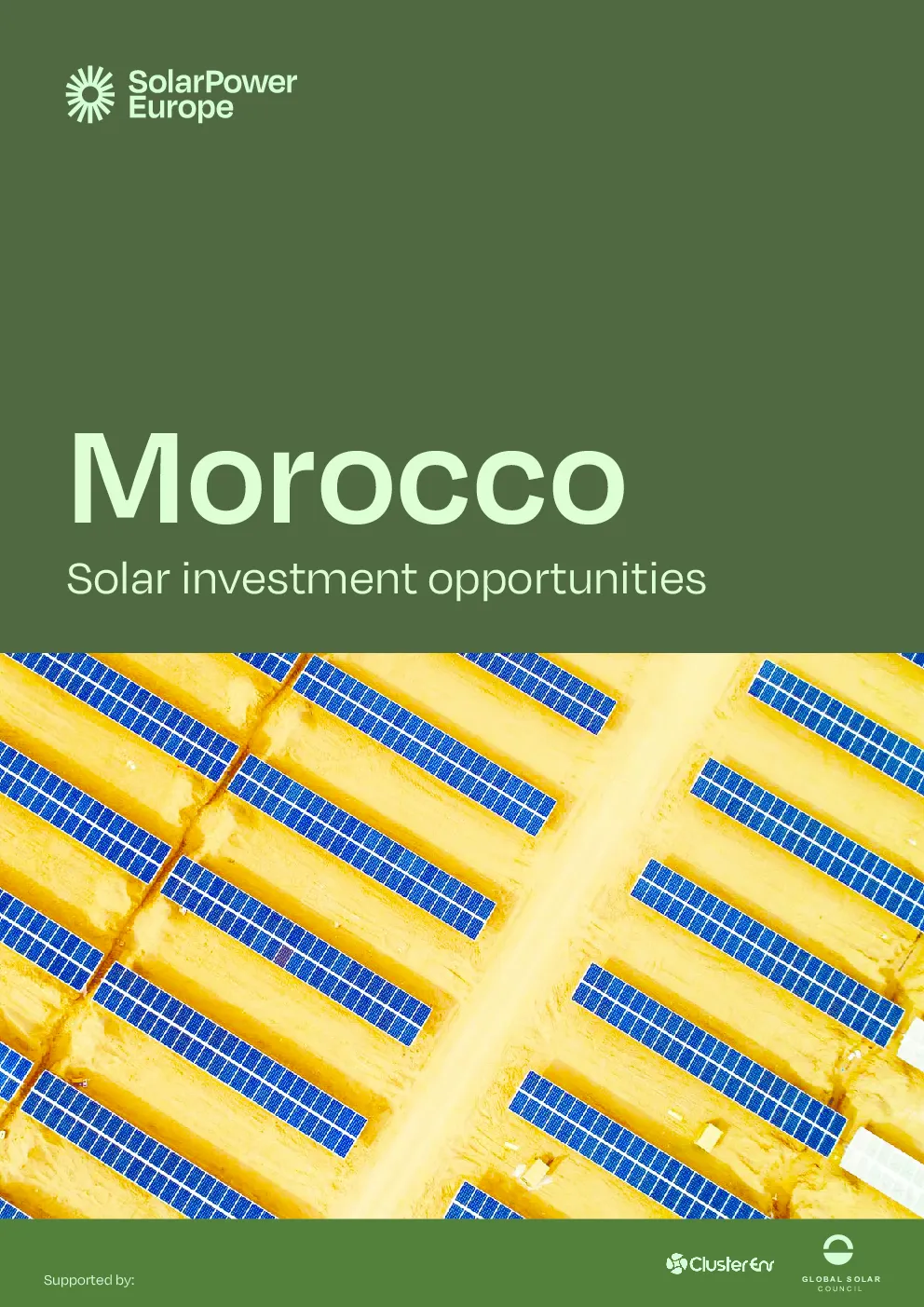
Morocco has significant potential in the solar energy sector due to its high solar irradiation levels and government commitment to renewable energy. The country aims to increase the share of renewable energy in its installed electricity capacity to at least 52% by 2030, with solar energy playing a crucial role.
Energy Geography: Morocco is strategically located in northwestern Africa, sharing borders with Spain, Algeria, and Mauritania. It has a high global horizontal irradiation (GHI) of 1,753 kWh/m2/year in the northern coastal regions and even higher in the southern regions, including the Western Sahara. The energy mix is currently dominated by fossil fuels (around 80% of electricity supply), with renewables accounting for the remaining 20%, primarily solar (3.5%) and wind (13%).
Demographics and Macroeconomic Context: Morocco has a population of over 36 million and a GDP of USD 152.38 billion. The country has experienced strong economic growth in recent years, but it faces challenges such as high unemployment, inflation, and the impact of climate-related events like droughts and the 2023 earthquake. Despite these challenges, Morocco has demonstrated resilience and control over its macroeconomic balances, with a projected GDP growth of 3.3% per year until 2028.
Business Environment: Morocco's business environment is considered favorable for foreign investment, particularly in the energy sector. The country ranks high in business location, business entry, and utility services, according to the World Bank Group's Business Ready report. However, it scores lower in dispute resolution and business insolvency.
Moroccan Electricity Market: Morocco has an ambitious strategy to diversify its energy mix and reduce dependence on imported fossil fuels. The National Energy Strategy for 2030 aims to achieve at least 52% renewable energy capacity by 2030. The regulatory framework supports the development of renewable energy projects through auctions, long-term power purchase agreements (PPAs), and financial incentives. The electricity sector is undergoing a deep reform process, opening up the market to private participation and independent power producers (IPPs).
Key Actors: The main actors in the energy market include the National Office for Electricity and Water (ONEE), the Moroccan Agency for Sustainable Energy (MASEN), the Moroccan Agency for Energy Efficiency (AMEE), the National Electricity Regulatory Authority (ANRE), and various private sector representatives like the Cluster ENR and the Moroccan Energy Federation.
Infrastructure: Morocco has an extensive electricity generation capacity, with significant investments in thermal power, wind, and hydropower. The country has several large-scale solar projects, including the Noor Ouarzazate CSP plant (510 MW) and the Noor Midelt CSP-PV project (1,600 MW). ONEE is leading efforts to upgrade the grid infrastructure, particularly the north-south connections, to support the growing share of renewable energy.
Recommendations: To further boost the solar sector, the report recommends enhancing fiscal and financial incentives, developing regulations for solar electricity exports, strengthening public consultations and dialogue with the private sector, and investing in grid modernization and battery storage technologies. Additionally, the report suggests streamlining permitting processes and establishing specialized training programs for solar professionals.
Conclusion: Morocco's solar energy sector presents numerous investment opportunities, driven by its favorable regulatory framework, abundant solar resources, and government commitment to the energy transition. With continued efforts to improve the business environment, infrastructure, and skills development, Morocco can become a leading regional hub for solar energy.