您的浏览器禁用了JavaScript(一种计算机语言,用以实现您与网页的交互),请解除该禁用,或者联系我们。 [DNV]:全球能源转型展望2024—全球和区域预测至2050 - 发现报告

全球能源转型展望2024—全球和区域预测至2050

电气设备 2024-10-21 - DNV ζޓއއKun
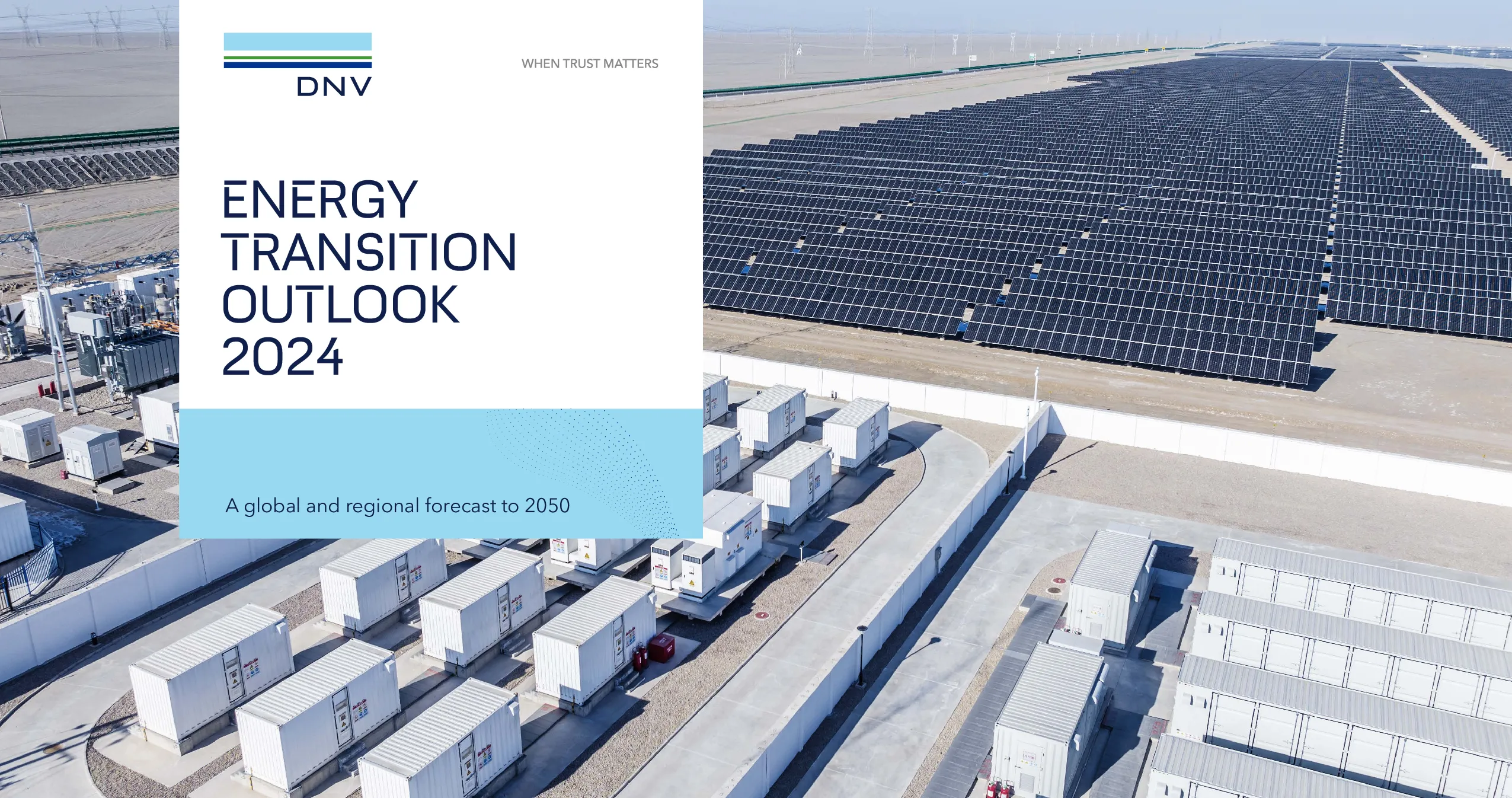
报告封面

A global and regional forecast to 2050 FOREWORD In this Outlook, we quantify the many efficienciesgained from a doubling of electrification globallyin the next 25 years. These efficiencies result invery large cumulative benefits that should givepolicymakers justification to tackle the difficulthard-to-electrify sectors while doubling down onrenewable technologies, including much-neededshort-term support for offshore wind. Last year, in the foreword to our 2023Energy Transition Outlook,I wrote that the globalenergy transition had not truly started. Clean energy had not started replacing fossil energyin absolute terms. Now, one year later, we have reached that point. 2024 is the year that theglobal energy transition has begun; it is also the year that emissions are likely to peak. in clean tech recycling systems and digitalization/AIfor efficient energy production, transmission, anduse are no-regret choices. Secondly, the transition is having difficulty withtechnologies for decarbonizing hard-to-electrifysectors, where market forces and policy are failingto address the challenges. Hydrogen and carboncapture and storage (CCS) are indispensable to aParis Agreementaligned transition — or any transitionthat results in warming close to 2°C. Many of the firstcommercial hydrogen energy projects have experi-enced cost overruns or have been stopped amidstmarket uptake uncertainty. Emissions peaking is, of course, good news, and amilestone for humanity. However, since emissions arecumulative, we must now focus on how quicklyemissions decline. Worryingly, our forecast decline isvery far from the trajectory required to meet theParisAgreementtargets. Our ‘most likely’ energy transitiondescribed in the pages that follow is one that leads towarming of 2.2°C by the close of this century. I hope this year’s Outlook inspires action, and asever, we welcome your feedback. 2024 is the year that the global energytransition has begun; it is also the year thatemissions are likely to peak. We have revised our long-term forecast for hydrogenand its derivatives down by 20% (from 5% to 4% offinal energy demand in 2050) since last year. Withouta meaningful carbon price and/or direct market-stimulating support, hydrogen will struggle to scaleand move down a cost-learning curve. The sameholds true for CCS where our current forecast is thatinvestment in CCS during our entire forecast periodwill be less than the amount invested in solar andwind in 2023 alone. If we want a faster transition, we must understandwhat is working and what is not. Developments in solar and batteries are key reasonsfor emissions peaking. Owing to record EV salesin China, we are seeing petroleum demand therebeginning to ebb away, while record solar instal-lations are finally edging out coal in China’s powersector. China’s achievements in the productionand export of clean technology are positive for theglobal transition, but are also facing a tariff backlash.Fully protecting all homegrown clean tech supplychains may come at too high a premium that risksslowing progress on decarbonization significantly.Policymakers must strike an admittedly very difficultbalance between national security, economic goals,andParis Agreementambitions. Meanwhile, investing Remi EriksenGroup President and CEODNV Firstly, solar PV and batteries are booming, growingfaster than we previously forecast. In 2023, new solarinstallations globally surged by 80% to reach 400 GW.One of the reasons solar is gaining ground so fastis because battery prices are plunging, making24-hour solar+storage power more accessible.Battery prices fell 14% last year, and they will keepon falling. That means that EVs are poised to becomecheaper too. The world is therefore still on tracktowards our long-standing prediction that 50% ofnew passenger vehicle sales worldwide will beelectric by 2031. Policymakers should recall that theParis Agreementinvolves a mission-oriented energy transition, andnot one simply reliant on market forces. While thetransition is now finally starting, its downwardstrajectory is too slow because enabling policy istoo weak. Cover photo:Solar PV with co-located battery storage atthe Gansu Dunhuang Solar Park, Gansu Province, China. HIGHLIGHTS 2024 is likely the year of peak energyemissions, but the slow declineof post-peak emissions keeps keyclimate goals out of reach1 — Global energy-related CO2emissions reduce 5%by 2030, compared with 2023 levels. In 2050, CO2emissions are at 17 Gt CO2. This is two decadeslater than the 2030 halving of CO2emissionsoutlined by the IPCC, and very far from net zeroin 2050. 1. 2024 is likely the year of peak energyemissions, but the slow decline in post-peakemissions keeps key climate goals out of reach — Solar PV installations are growing so rapidly thatthe need for coal power is reducing; global coalconsumption in power stations is lower in 2024than 2023. In the coming decade, the IndianSubcontinent is the only region with expectedgrowth in po