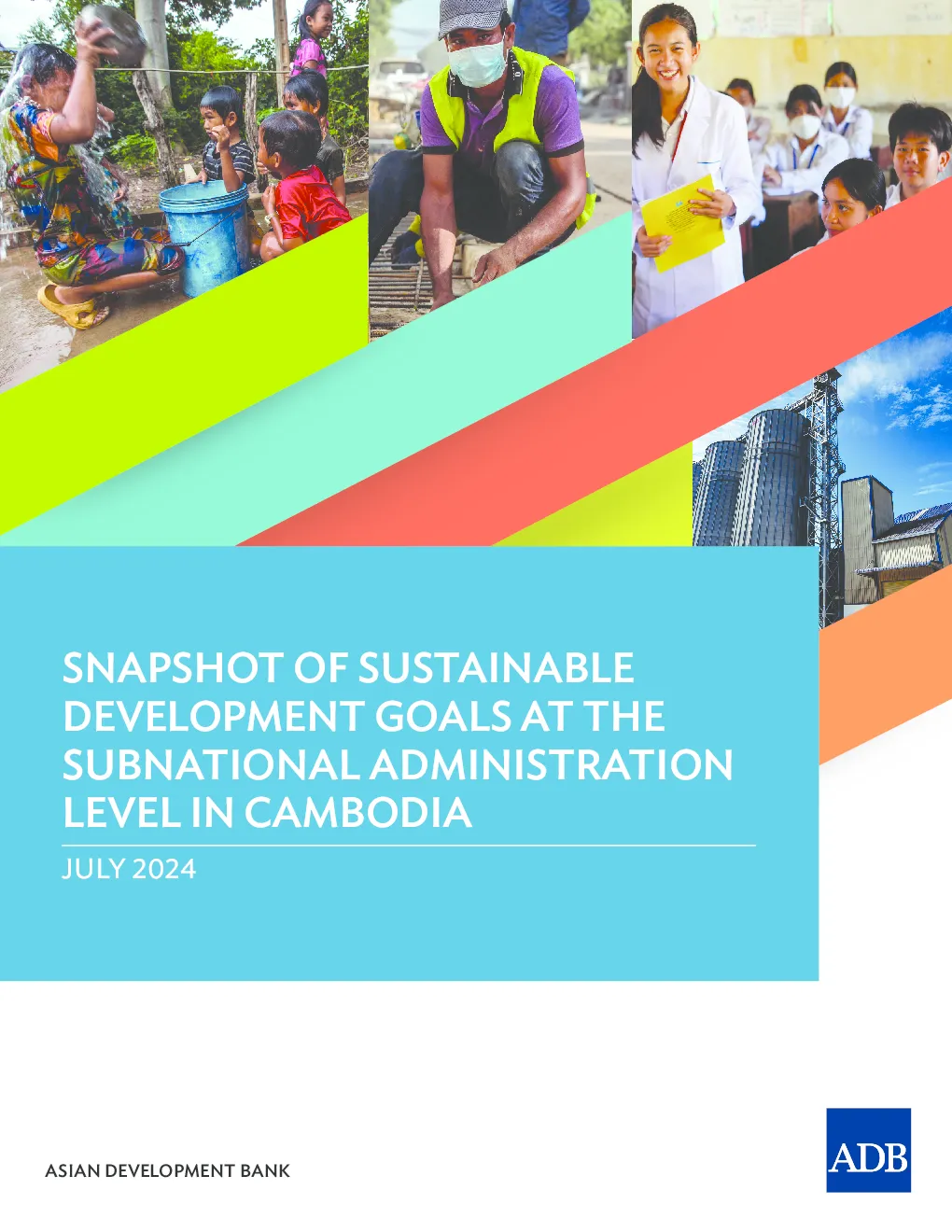
Cambodia's Subnational Administration's Role in Sustainable Development Goals
Executive Summary
This report highlights the pivotal role of Cambodia's subnational administrations (SNAs) in advancing the country's push towards the United Nations Sustainable Development Goals (SDGs) and fostering inclusive economic growth. The study emphasizes the challenges posed by inadequate data in measuring progress in key areas such as health, education, and gender equality. It suggests strategies to enhance coordination, data quality, and technological integration to better align local governance with national SDG objectives.
Introduction
The Asian Development Bank (ADB) conducted this study to assess how Cambodia's SNAs contribute to sustainable development. The ADB is dedicated to promoting prosperity, inclusion, resilience, and sustainability in the Asia-Pacific region. This publication provides insights into the localization of the SDGs at the subnational level in Cambodia, focusing on socioeconomic context, decentralization reforms, awareness, progress, and contributions of SNAs.
Key Findings
-
Awareness and Progress: SNAs in Cambodia show varying levels of awareness about the SDGs at the local level. However, recent progress in sustainable development underscores the relevance of SNAs' contributions to the implementation of these goals.
-
Four Dimensions of Localization: The study identifies four dimensions critical for the successful localization of SDGs at the subnational level:
- Legal, policy, and institutional frameworks
- Budgeting, functional assignment, and planning
- Accountability mechanisms, monitoring, evaluation, and data work
- Multi-stakeholder engagements and partnerships, and knowledge solutions
-
Contributions of SNAs: SNAs contribute significantly to the Cambodian SDG agenda through various activities aligned with the four dimensions identified. These include policy development, resource allocation, community engagement, and data-driven decision-making.
Conclusion and Recommendations
The report concludes that enhancing SNAs' capacity, improving data systems, and fostering collaborative partnerships are essential for maximizing their contribution to sustainable development. Recommendations focus on strengthening institutional frameworks, improving budgetary processes, enhancing data management, and deepening stakeholder engagement.
Implications for Practice
This study underscores the importance of aligning local governance structures with national SDG targets. By addressing data gaps, improving coordination mechanisms, and leveraging technology, Cambodia can better harness the potential of its SNAs to drive sustainable development.
Methodology and Data Collection
The research employed a mixed-method approach, combining quantitative analysis of macroeconomic indicators, qualitative surveys, and case studies to provide a comprehensive view of the SDG localization process at the subnational level. Data collection involved government records, surveys with stakeholders, and interviews with officials and non-governmental organizations.