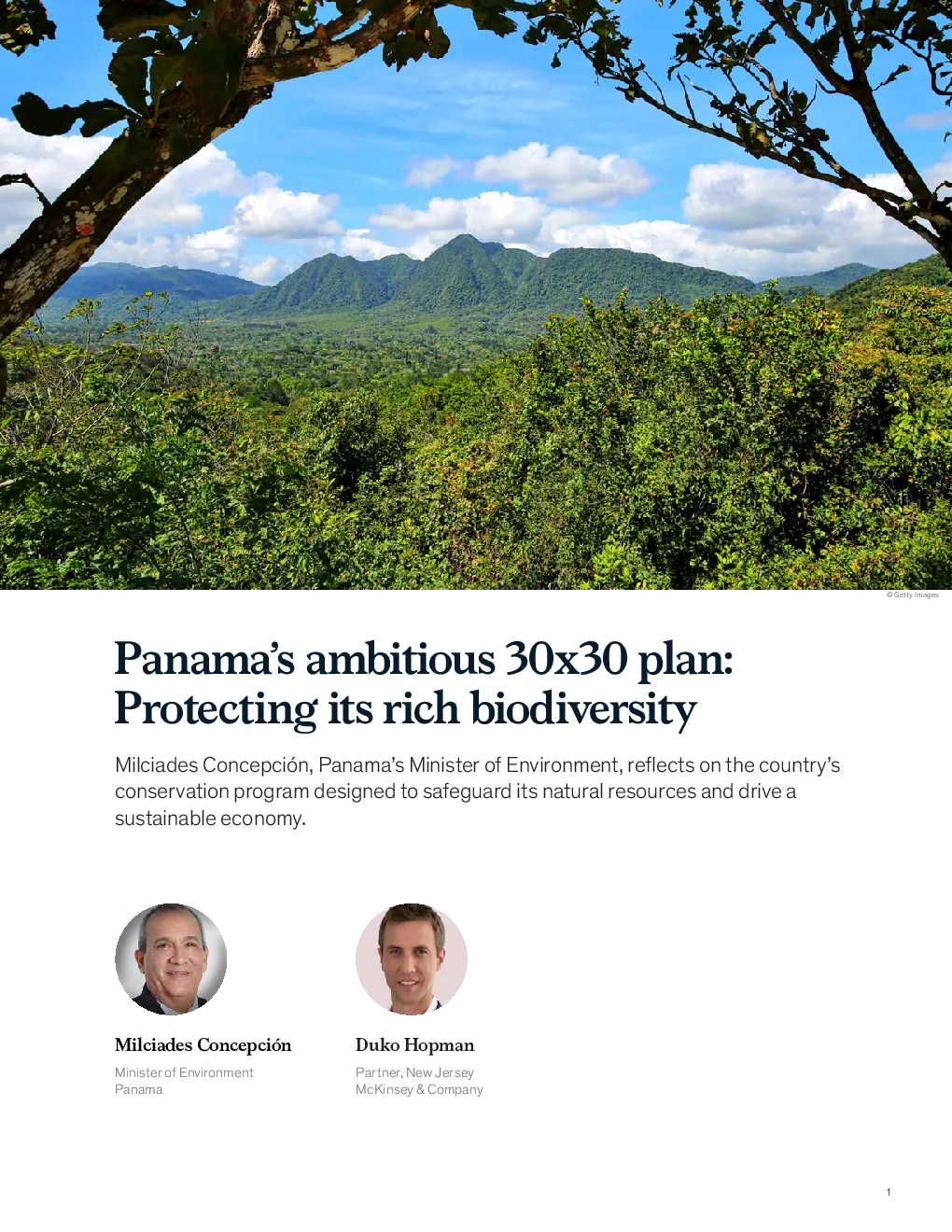
Panama's ambitious 30x30 Plan aims to protect its rich biodiversity by safeguarding natural ecosystems and driving sustainable economic growth. This plan aligns with the Global Biodiversity Framework's objective to halt and reverse biodiversity loss by 2030. Key points of the plan include:
-
Significant Natural Capital: Panama, home to 4.5 million people, boasts remarkable biodiversity with over 10,000 plant species, 200+ mammal species, and 900+ bird species. This rich natural heritage has prompted Panama to commit to ambitious conservation efforts.
-
Implementation of the 30x30 Program: In 2021, Panama joined the High Ambition Coalition (HAC) for Nature and People, aiming to protect at least 30% of the world's land and oceans by 2030. The "30x30" target is being addressed through a dedicated implementation program that focuses on stopping species loss, protecting vital ecosystems, and mitigating climate change impacts.
-
Coordinated Approach: The Panama 30x30 program involves collaboration between the private and public sectors, non-governmental organizations (NGOs), Indigenous authorities, and research centers. It leverages scientific data and geospatial analysis to propose transformative conservation initiatives.
-
Efficient Implementation Structure: The Center for Conservation and Sustainability (CONSOS) oversees implementation, equipped with digital capabilities to monitor progress. The program is divided into five focus areas: land spatial, marine spatial, financial, regulatory, and change management.
-
Key Objectives: The first phase involved establishing the importance of the GBF to Panama and defining priorities through multidisciplinary workshops. The second phase focused on creating a plan based on risk analysis, existing initiatives, and scenario development. The third phase built an integrated implementation plan with a detailed business case and funding rationale.
-
Economic Transformation: The 30x30 program transforms productive processes in sectors like agriculture, tourism, and energy, incorporating sustainability, climate change, and biodiversity conservation criteria.
-
Funding and Challenges: An estimated $265 million investment over eight years is required, with annual allocations ranging from $33 million to $45 million. Key challenges include securing funding, managing cross-sector collaborations, and working closely with Indigenous groups.
-
Guidance for Other Countries: Panama's experience highlights the importance of cross-sector management, stakeholder engagement, and early implementation in achieving biodiversity conservation goals.
The Panama 30x30 plan demonstrates a comprehensive approach to biodiversity conservation, integrating ecological, economic, and social considerations for a sustainable future.