reopen of the Strait of Hormuz will bring relief to global economies but the lasting impacts on vulnerable economies remain significant. The disruption caused by over 100 days of shipping delays has already led to negative effects on the global economy, particularly affecting vulnerable economies exposed to oil and fertilizer price shocks, resulting in persistent inflation and affordability issues for basic necessities like food and healthcare.
The reopening of the strait is expected to stabilize energy markets, with crude oil prices showing a downward trend. However, sectors like transport will take longer to adjust due to higher freight costs. The ripple effects of past input price shocks pose risks to future food security, as higher energy prices increase transport costs, potentially raising domestic food prices further.
Vulnerable economies, especially small island developing states (SIDS) and least developed countries (LDCs), are heavily reliant on oil and food imports, making them highly susceptible to price shocks. Data shows that a large number of economies are net importers of oil or cereal products, with SIDS and LDCs facing dual exposure to both oil and food price shocks.
The ability to cope with these shocks varies across economies. Those with tighter public finances, high debt burdens, exchange rate risks, and declining remittances are hit hardest. Short-lived energy shocks can have long-term consequences, fueling sustained inflation even after the initial shock fades. Food price inflation may continue to rise, and prolonged periods of unaffordable food can lead to lasting health impacts, such as increased child wasting.
Normalization of trade will take time, as shipping and value chains need time to adapt, and the impacts of energy shocks will continue to be unevenly distributed. Food production risks remain high due to persistent input price hikes and the potential for a strong El Niño, raising concerns about food insecurity. International support is needed to improve the coping capacity of vulnerable economies, as declining official development assistance and mounting debt servicing burdens risk slowing recovery. Investment in resilience, including trade diversification and domestic resilience measures, is crucial but constrained by financial limitations.
UN Secretary-General António Guterres emphasized that the impacts of these shocks will last for many months, with developing countries bearing the heaviest toll, calling for a ceasefire and increased efforts to mitigate the effects.
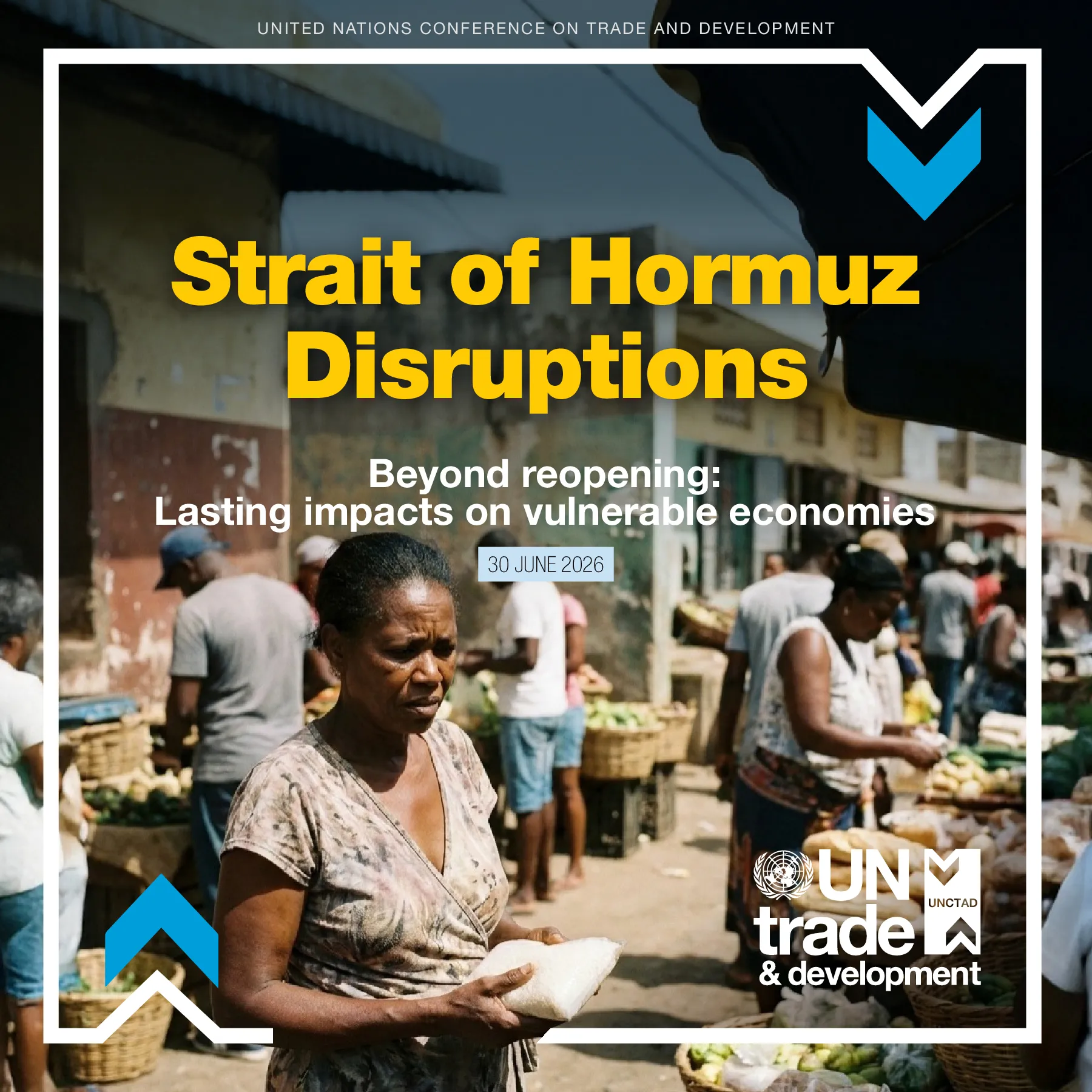
超越重开:对脆弱经济体产生的持久影响
引言
霍尔木兹海峡重新开放将为许多经济体带来急需的缓解。
这是能源市场和国际贸易逐步恢复的第一步。
然而,在超过100天的运输中断期间,负面影响已经波及全球经济。
脆弱经济体尤其容易受到石油和化肥价格冲击的影响。这些冲击可能导致持续通货膨胀。
人们受到通货膨胀的影响,尤其是穷人。它挤压了家庭预算,并使必需品(如食物和医疗保健)变得更难负担得起。
重新开放为经济复苏铺平了道路。但对脆弱经济体而言,这条道路可能漫长、不平坦且代价高昂。它们需要国际支持来提升应对能力。
经过100多天的中断,海峡两岸的贸易预计将恢复。
2026年霍尔木兹海峡的每日船舶通行
海峡开启的前景正让能源市场趋于平静。
备注:价格变动时间范围为2025年6月1日至2026年6月26日。原油指欧洲(布伦特)、北美(WTI)、中东(迪拜)和俄罗斯(乌拉尔)的平均基准价格。军事升级期间(高亮显示)为2026年2月28日至2026年6月14日,期间宣布了一项包括开放海峡在内的协议。
但在某些领域,例如交通,价格调整需要更长时间。
IGC谷物及油籽运费指数(GOFI),2013年1月1日=100
备注:2025年6月1日至2026年6月23日期间的运费成本变化情况。该指数涵盖从主要出口地出发的68条航线,包括阿根廷、澳大利亚、巴西、黑海、加拿大、欧盟和美国。
冲击波已经席卷了全球经济。
过去的输入价格冲击仍然对未来的粮食安全构成风险。
限制石油、天然气和氮肥的供应,并提高其成本。
大多数脆弱经济体都易受石油和食品价格冲击。
石油或谷物产品的净进口经济体数量
最不发达国家 (zuì bù fā zhǎn guó jiā)小岛屿发展中国家
注释:七个同时属于最不发达国家和小岛屿发展中国家的双重暴露国家,包含在最不发达国家总数中。涉及标准国际贸易分类(SITC)第04组和第33组中的“石油、石油产品和相关材料”以及“谷物和谷物制品”。
值得注意的是,小岛屿发展中国家严重依赖石油进口。
石油及石油产品净进口占GDP的比重,2022-2024年平均值
注意:选择因净进口石油产品和谷物而面临双重风险的脆弱经济体。产品指标准国际贸易分类(SITC)第33类“石油、石油产品及相关材料”。
对于许多最不发达国家而言,主要食品的进口至关重要。
谷物及谷物制品净进口占GDP的比重,2022-2024年平均值
注意:选择那些因净进口石油产品和谷物而面临双重暴露的脆弱经济体。基里巴斯和东帝汶也是小岛屿发展中国家(SIDS)。涉及“谷物和谷物制品”(根据标准国际贸易分类 SITC 04)。
贸易冲击最严重地打击应对能力有限的地方。
更紧的公共财政意味着缓冲冲击的空间更小,尤其是在脆弱国家面临
调动内外部资源的困难
高额外部债务带来的沉重偿债负担和汇率风险
一些经济体的资金生命线可能因此中断的汇款减少。
短暂的能源冲击可能带来长期后果
在一个脆弱的全球经济中,能源冲击助长了持续的高通胀。
能源价格每变动1%对通货膨胀的影响(以百分比表示)
联合国贸易和发展会议(UNCTAD),基于国际货币基金组织(IMF),帕特里克·伊马姆和蒂格兰·波格霍扬(2026年)。
注意:基于消费者价格指数的通货膨胀累积影响。估计基于70个发达和新兴经济体。所有系数在95%的置信区间下,基于稳健标准误,均具有统计显著性。
食品价格通胀可能在触发冲击消退后仍持续攀升。
发展中国家按国家组别的年度食品价格通胀率中位数
联合国贸易和发展会议(UNCTAD)数据,基于各国资料及经合组织资料,源自路孚特数据与分析。
注:根据食品和饮料消费价格指数。2020年至2024年期间,食品价格受到COVID-19通胀、乌克兰战争和气候冲击等多重因素推动。所呈现的数据涵盖82个发展中国家、21个最不发达国家和10个小岛屿发展中国家。
短暂的无法负担的食物时期可能带来长期后果。
儿童营养不良风险与真实食品价格上涨5%相关联
儿童消瘦是指儿童的体重相对于身高偏低。这是一种急性营养不良的衡量指标,与婴幼儿死亡率有密切关联。
需要考虑的问题
贸易正常化需要时间。
1国际能源价格可以快速调整,但航运和价值链需要时间来适应。
2 能源冲击的影响将继续不均衡地显现。许多脆弱经济体应对飙升的进口账单的能力有限。依赖石油进口的国家面临国内通胀压力尤为严重。
3食品生产风险依然存在。
输入价格上涨可能对生产和贸易产生持续影响,加上预计将出现强烈的厄尔尼诺现象,加剧了人们对粮食不安全问题的担忧。
需要国际支持。减少官方发展援助并加剧偿债负担,可能会拖慢复苏步伐。
投资于韧性至关重要。
这包括贸易来源的多元化,以及在财务限制条件下的其他国内韧性措施。
这些冲击将在未来数月持续显现——发展中国家将承受最严重的影响。
我呼吁各方遵守停火协议,并加倍努力。
安托万·古特雷斯 联合国秘书长